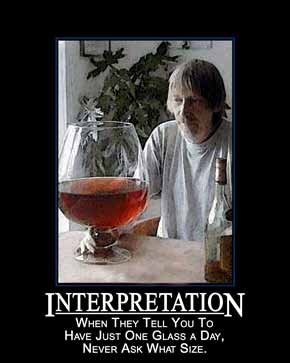
Breathtaking Wines
This is an update of an article I wrote a couple of years ago for one of Chico Harris'publications that I think is worth running again. You may have heard wine snobs talk about "breathing" their wine before serving it. Well, this is another one of those interesting facets of wine that has some basis in fact, but which many people have run off with before they understand what they are doing.
First of all, breathing applies, for the most part, only to red wines. Occasionally, a white wine will have some off odors right after it is opened, but these usually dissipate within a few minutes without any special handling of the wine. Therefore, as a rule of thumb, white wines are about as good as they are going to get right out of the bottle. Red wines frequently are a different story and the smell and taste can change dramatically in the space of an hour or less.
Most of the experts with whom I have discussed this believe the changes we observe in some red wines after they have been opened is a result of a combination of the release of trapped gases and the mixing of air with the wine. In fact, the reason we swirl wine in the glass is to facilitate the release of the aromatic compounds that are responsible for the smell or bouquet.
When the character of a wine changes as a result of breathing, this probably reflects the loss of some of the more volatile components in the wine and possibly a chemical reaction between other compounds and oxygen in the air. Just remember that any wine left open to the air long enough will sooner or later turn into vinegar and some other nasty tasting stuff as products of the inevitable spoilage process.
It is interesting that not all red wines benefit from breathing, but I have witnessed repeatedly some remarkable transformations in certain types of wines that had been well exposed to the air for various lengths of time. To best appreciate this transformation you have to like dry red wines. I want to give you some tips on how to take advantage of this phenomenon along with a little exercise to illustrate the kind of change I am talking about.
One thing of which I am absolutely certain is that nothing of consequence will happen to your wine if you just pull the cork and let the bottle stand on the counter. To get the kind of noticeable change I have described, you need to expose a wine to as much air as possible, not just the one square inch hole left by the cork. What I do is give my red wines a good thrashing by vigorously sloshing them into a large container with a wide opening such as an ice tea pitcher. I let the wine stand for as long as I can discipline myself, which can be up to an hour or more depending on the type of wine. Of course, I always taste a sample right after opening the bottle to make sure the wine basically is okay and to provide a reference point for later.
For very heavy wines, or if the wine seems a bit rough or harsh, I will let the wine stand longer with periodic stirring. I have had some wine that didn't smooth out until the next day. Wines that have been stored for a long time, like eight to ten years or more, also might require a little more time to fully release their aromas. But it is important to check frequently on the progress of these kinds of wines since they can become somewhat fragile over time and can quickly dissipate in the decanter or glass.
As I mentioned, some wines never change and others change dramatically, and it seems that the wines most susceptible to change from breathing are those made from the Pinot Noir grape. The best way to illustrate the effect is to get a bottle of either Fleur de Carneros, Napa Ridge, or Indigo Hills Pinot Noir, all of which are available in Oxford. Open the bottle and pour a full glass of the wine and quickly cover the glass with plastic wrap to seal out the air. Pour the wine into the glass gently to limit the amount of air you stir into the wine. Take the remaining wine, or the portion you think you will drink at this sitting, and slosh it into a container as I described above to get a lot of air into the wine and let it stand for at least one hour. You might want to put a paper towel or something over the mouth of the container to keep the bugs out, but be sure air can get in and out. Stir the wine vigorously several times during this period to mix in the air.
At the end of the hour or so, take several good whiffs of the wine in the open container and then smell the wine in the sealed glass. Smelling and tasting the wines side by side you should detect noticeable differences. The wine that was open to the air usually will smell much fruitier, have more complex flavors, and have a softer feel in your mouth, while the "fresh" wine might seem a little dull, lacking aroma and flavor, and it might feel a little harsh.
A better way to do this exercise is to get some friends together for a meal and use two separate bottles of the same wine. Open one bottle and do the breathing thing for an hour or so, and then compare it to the freshly opened second bottle. Then you can wax philosophical for the rest of the evening about how complex and interesting wine can be.
Since I have had some dramatic experiences with breathing wines, I now routinely dump most of my red wines into a pitcher just in case they intend to play this hide and seek game. However, one type of wine that does not seem to improve with breathing is red Zinfandel. I have heard some people object to breathing any wine since they believe you can lose some of the fruit aromas and flavors this way. I'm not sure I agree with this, but the best thing to do is to smell and taste your wine right after opening it. If it seems a little funky or dull, pour some in a glass and try airing it out. If it seems okay, serve it up or put the cork back in until you are ready to serve it.
For those of you who want to keep a bit of poetry about your wine and don't want to be bothered by all the technical details, you can think of this process as the unfolding of the petals of a flower. The wine has been tightly folded up on itself and sealed in a bottle for a year or more. When you pour the wine into a glass or a large vessel you are allowing the wine to unfold its petals and release its fragrant bouquet. I, however, prefer to view the process as releasing a magical genie who promises to grant me my wish for a fantastic glass of wine. "Open, says me!"
John Juergens
Sunday, April 13, 2008
Saturday, March 22, 2008
The top 10 wine spots in Miami

Indulge in Miami’s new nightlife scene
Wine bars are popping up everywhere in Miami—from North Miami, to the Gables to the deep south—and are quickly becoming the new hot spots. Sip a glass of Malbec at Novecento’s The Malbec Room on Brickell or savor the flavor by pairing bubbly with fondue at VINO Miami. Whether you’re a novice or a seasoned connoisseur, wine bars are the next best places for happy hours, birthday get-togethers and, obviously, toasts! The best part is, there’s always more vino to go around -- no worries about the tap running dry. Check out the Top 10 Miami Wine Bars from a twenty-something oenophile (that’s wine lover for you beginners).
For the list with photos: highlight, copy, paste the link below to your browser & go!
http://southflorida.metromix.com/bars-and-clubs/photogallery/the-top-10-wine/265504/content
Cheers!
By Tracy A. Block


Friday, March 21, 2008

Cognac's Cousin From Gascony
Armagnac has an image problem. To start with, not that many people seem to be sure exactly what it is. Kingsley Amis, in the "Mean Sod's Guide" section of his book "On Drink," suggested that the mean sod (that is, cheap host) can avoid the expense of serving a post-prandial cognac by presenting his guests a "rather exceptional" armagnac: "a watered-down cooking brandy from remote parts of France or from South Africa." Since few know what armagnac -- a French brandy not unlike cognac, but from the heart of Gascony -- should taste like, the average guest will be easily fooled, Amis suggested. But ignorance isn't the biggest impediment to armagnac finding the market it deserves. Far worse is that, to the extent most folks have heard of armagnac, the impression they have been given is that it is a pompous quaff for phonies and poseurs and heavies -- characters such as Senator Planet, Guy Francon, Sheridan Ballou and Eugene Lopwitz.
Senator Planet, in John Dos Passos's 1936 indictment of American avarice, "The Big Money," makes today's Abramoff crowd look like kindergartners. "I've been much criticized of late," laments the senator over a lavish dinner with lobbyists, "by irresponsible people of course, for what they term my reactionary association with big business." To punctuate Senator Planet's reactionary bona fides, Dos Passos puts a brandy in his hand and has the rapacious fellow proclaim: "Fine Armagnac has been my favorite for years."
A few years later, Ayn Rand picked up the theme. The novelist prided herself on penning caricatures of phonies such as Guy Francon, who in "The Fountainhead" embodies everything her architect hero Howard Roark despises. A rich and successful architect, Francon is intellectually lazy and stylistically derivative. Francon "hasn't designed a doghouse in eight years," but when he did, he was fond of such touches as "Corinthian columns of cast iron painted gold, and garlands of gilded fruit on the walls." And what does Francon like to drink? Armagnac.
Rand seems to associate armagnac with the most contemptible sort of self-satisfaction. The paragraph that ends with Francon declaring he has fired Roark (because "the insolent bastard" refused to mock up a simplified Doric design for an office building) begins with the boss bragging about how he buys his favorite armagnac for "a hundred dollars a case!"
Armagnac continued to come in for such abuse in Raymond Chandler's 1949 novel "The Little Sister." Sheridan Ballou is a Hollywood agent most notable for his pretentious affectations. When detective Philip Marlowe first visits Ballou's office, the agent strolls across the carpet swinging a Malacca cane. "It could only happen in Hollywood," sneers Marlowe. "That an apparently sane man could walk up and down inside the house with a Piccadilly stroll and monkey stick in his hand." Ballou soon has a glass of armagnac in his hand instead.
The agent pours a "pot-bellied" glass for Marlowe, too, and then congratulates himself for it: " 'Armagnac,' he said. 'If you knew me, you'd appreciate the compliment.' " Ballou then demonstrates the approved method for enjoying the drink: "He lifted the glass, sniffed and sipped a tiny sip." Marlowe is having none of that nonsense: "I put mine down in a lump. It tasted like good French brandy."
"My God," sputters the agent, "you sip that stuff, you don't swallow it whole."
"I swallow it whole," is Marlowe's blunt reply.
Derision of armagnac -- or at least of those who fancy it -- isn't restricted to mid-century authors. Tom Wolfe uses the brandy in "The Bonfire of the Vanities" to fill out the picture of Sherman McCoy's boss, Eugene Lopwitz. The financier, who has created a faux English manor lifestyle for himself, maintains a private jet he keeps stocked with a 1934 armagnac. "It's great stuff," Lopwitz crows. "That's the greatest year there ever was for Armagnac, 1934."
Unlike its cousin cognac, armagnac has long featured vintage dating, which is confounding to casual consumers but catnip to the sort of dilettante eager to bank impressively obscure knowledge. Thus armagnac's impression of fussiness -- a reputation that is not deserved.
If anything, armagnac is less fussy than cognac, which has been criticized over the years for being so carefully matured and blended that it ends up missing the quirky individuality natural, say, to single-malt Scotch. Though both cognac and armagnac depend in large measure on négociants -- merchants who buy up casks from small producers to age, blend and bottle under a brand name -- armagnac is decidedly less corporate than cognac. Which is one of the reasons that the Gascon brandy brands are generally less well known than Courvoisier, Hennessy and Martell. But it is also the reason that armagnacs tend to have a little more personality than cognacs. This is certainly the case with the single-estate, vintage, unblended armagnacs bottled by the boutique négociants such as Francis Darroze. Even the mainstream blended armagnacs retain a hint of rusticity that makes them a pleasant change of pace from cognac.
I went to my local liquor stores to see what nonvintage armagnacs I could find, and enjoyed most of them. They shared the regional style, which is somewhat drier than brandy from the Cognac region. Of those I tried, I particularly liked several, including the Cerbois V.S.O.P., that had a satisfying richness cut with a nice spicy note of licorice. The Laubade X.O. was dense without being heavy, with a taste of toast just shy of being burned. The Kelt Reserve de Chateau de Saint Aubin had a slight scent of smoke, but on the tongue was light and soft, with a lovely balance between its taste of fresh fruit and its buttery texture. The Kelt, by the way, ought not to be confused with "Domaine de Saint Aubin" a legendary producer of armagnac that is no more, the remaining stocks of which are being carefully (and expensively) doled out by Darroze.
If you give armagnac a try, don't feel obliged to swirl it in a snifter or sample it in baby-sips. Even so, please don't put it down in a lump.
Eric Felten
Senator Planet, in John Dos Passos's 1936 indictment of American avarice, "The Big Money," makes today's Abramoff crowd look like kindergartners. "I've been much criticized of late," laments the senator over a lavish dinner with lobbyists, "by irresponsible people of course, for what they term my reactionary association with big business." To punctuate Senator Planet's reactionary bona fides, Dos Passos puts a brandy in his hand and has the rapacious fellow proclaim: "Fine Armagnac has been my favorite for years."
A few years later, Ayn Rand picked up the theme. The novelist prided herself on penning caricatures of phonies such as Guy Francon, who in "The Fountainhead" embodies everything her architect hero Howard Roark despises. A rich and successful architect, Francon is intellectually lazy and stylistically derivative. Francon "hasn't designed a doghouse in eight years," but when he did, he was fond of such touches as "Corinthian columns of cast iron painted gold, and garlands of gilded fruit on the walls." And what does Francon like to drink? Armagnac.
Rand seems to associate armagnac with the most contemptible sort of self-satisfaction. The paragraph that ends with Francon declaring he has fired Roark (because "the insolent bastard" refused to mock up a simplified Doric design for an office building) begins with the boss bragging about how he buys his favorite armagnac for "a hundred dollars a case!"
Armagnac continued to come in for such abuse in Raymond Chandler's 1949 novel "The Little Sister." Sheridan Ballou is a Hollywood agent most notable for his pretentious affectations. When detective Philip Marlowe first visits Ballou's office, the agent strolls across the carpet swinging a Malacca cane. "It could only happen in Hollywood," sneers Marlowe. "That an apparently sane man could walk up and down inside the house with a Piccadilly stroll and monkey stick in his hand." Ballou soon has a glass of armagnac in his hand instead.
The agent pours a "pot-bellied" glass for Marlowe, too, and then congratulates himself for it: " 'Armagnac,' he said. 'If you knew me, you'd appreciate the compliment.' " Ballou then demonstrates the approved method for enjoying the drink: "He lifted the glass, sniffed and sipped a tiny sip." Marlowe is having none of that nonsense: "I put mine down in a lump. It tasted like good French brandy."
"My God," sputters the agent, "you sip that stuff, you don't swallow it whole."
"I swallow it whole," is Marlowe's blunt reply.
Derision of armagnac -- or at least of those who fancy it -- isn't restricted to mid-century authors. Tom Wolfe uses the brandy in "The Bonfire of the Vanities" to fill out the picture of Sherman McCoy's boss, Eugene Lopwitz. The financier, who has created a faux English manor lifestyle for himself, maintains a private jet he keeps stocked with a 1934 armagnac. "It's great stuff," Lopwitz crows. "That's the greatest year there ever was for Armagnac, 1934."
Unlike its cousin cognac, armagnac has long featured vintage dating, which is confounding to casual consumers but catnip to the sort of dilettante eager to bank impressively obscure knowledge. Thus armagnac's impression of fussiness -- a reputation that is not deserved.
If anything, armagnac is less fussy than cognac, which has been criticized over the years for being so carefully matured and blended that it ends up missing the quirky individuality natural, say, to single-malt Scotch. Though both cognac and armagnac depend in large measure on négociants -- merchants who buy up casks from small producers to age, blend and bottle under a brand name -- armagnac is decidedly less corporate than cognac. Which is one of the reasons that the Gascon brandy brands are generally less well known than Courvoisier, Hennessy and Martell. But it is also the reason that armagnacs tend to have a little more personality than cognacs. This is certainly the case with the single-estate, vintage, unblended armagnacs bottled by the boutique négociants such as Francis Darroze. Even the mainstream blended armagnacs retain a hint of rusticity that makes them a pleasant change of pace from cognac.
I went to my local liquor stores to see what nonvintage armagnacs I could find, and enjoyed most of them. They shared the regional style, which is somewhat drier than brandy from the Cognac region. Of those I tried, I particularly liked several, including the Cerbois V.S.O.P., that had a satisfying richness cut with a nice spicy note of licorice. The Laubade X.O. was dense without being heavy, with a taste of toast just shy of being burned. The Kelt Reserve de Chateau de Saint Aubin had a slight scent of smoke, but on the tongue was light and soft, with a lovely balance between its taste of fresh fruit and its buttery texture. The Kelt, by the way, ought not to be confused with "Domaine de Saint Aubin" a legendary producer of armagnac that is no more, the remaining stocks of which are being carefully (and expensively) doled out by Darroze.
If you give armagnac a try, don't feel obliged to swirl it in a snifter or sample it in baby-sips. Even so, please don't put it down in a lump.
Eric Felten
History of Armagnac
Armagnac is historically the oldest brandy in France, with references dating back as far as 1411 when it was used mainly for therapeutic reasons – hence nowadays a brandy being the drink of choice to calm the nerves following shock. This was 200 years before the first mention of Cognac and has always cast a shadow over the brandy it likes to see as a smaller, non-threatening, younger brother. Nowadays however it is Armagnac which is the rising star and big brother Cognac has a lot to watch out for!
Made in the Pays de Gascogne in the far south west of France, Armagnac has three distinct producing regions:
Bas armagnac: produces the most prestigious Armagnacs with a particular bouquet of plum.
Ténarèze: produces some highly perfumed spirits which are sometimes rather coarser than those from the other areas. It is responsible for most of the production of Armagnac.
Haut armagnac: this appellation has the largest territory but the smallest vineyard area with the smallest production of the three areas.
Armagnac is still mainly produced by small scale rural growers with some producers sharing mobile stills that are driven around the countryside at production time. The locals used to joke that when crows travelled over the region they flew upside down so they couldn’t see how poor the area was! Whether this is the case nowadays is doubtful but in comparison with Cognac where global producers are commonplace, this loyalty to the roots of the traditions of the Armagnac industry is one of many factors that secure a place in the hearts of consumers for this historical spirit
.
Key differences between Armagnac and Cognac:
Grapes Whilst Cognac is made largely from the Ugni Blanc grape, Armagnac’s base wine is made from a blend of several varieties to include Ugni Blanc and Folle Blanche.
Distillation The still used in Cognac is based on double distillation (the alcohol is obtained by heating twice) and the brandy has an average alcoholic content of 72° when leaving the still, the still mainly used for Armagnac is based on continuous distillation (although the same method as for Cognac can also be used) and the brandy it produces has an alcoholic content of 54 to 60. This continuous distillation gives a spirit rich in aroma (one of the reasons that Armagnac is noticeably more fragrant than Cognac) with a finish to match it’s reputation as ‘the dancing fire’.
Ageing Cognac is aged mainly in French oak casks from Limousin or Tronçais.
Armagnac is aged in French oak primarily from the Monlezun forest in Bas Armagnac.
Vintage dated Armaganc (a single harvest’s unblended produce) has long been one of the many marks of the individuality of the region (although vintage dating is becoming increasingly popular in Cognac).
The Oxford Wine Company is a local specialist in this particular area (having strong relationships with producers such as Delord, Gelas and Château de Tariquet) and displays single vintages ranging from 1900 to 1990, these prove popular with both connoisseurs and those seeking something a bit different for a special birthday or anniversary.
John Chapman
Made in the Pays de Gascogne in the far south west of France, Armagnac has three distinct producing regions:
Bas armagnac: produces the most prestigious Armagnacs with a particular bouquet of plum.
Ténarèze: produces some highly perfumed spirits which are sometimes rather coarser than those from the other areas. It is responsible for most of the production of Armagnac.
Haut armagnac: this appellation has the largest territory but the smallest vineyard area with the smallest production of the three areas.
Armagnac is still mainly produced by small scale rural growers with some producers sharing mobile stills that are driven around the countryside at production time. The locals used to joke that when crows travelled over the region they flew upside down so they couldn’t see how poor the area was! Whether this is the case nowadays is doubtful but in comparison with Cognac where global producers are commonplace, this loyalty to the roots of the traditions of the Armagnac industry is one of many factors that secure a place in the hearts of consumers for this historical spirit
.
Key differences between Armagnac and Cognac:
Grapes Whilst Cognac is made largely from the Ugni Blanc grape, Armagnac’s base wine is made from a blend of several varieties to include Ugni Blanc and Folle Blanche.
Distillation The still used in Cognac is based on double distillation (the alcohol is obtained by heating twice) and the brandy has an average alcoholic content of 72° when leaving the still, the still mainly used for Armagnac is based on continuous distillation (although the same method as for Cognac can also be used) and the brandy it produces has an alcoholic content of 54 to 60. This continuous distillation gives a spirit rich in aroma (one of the reasons that Armagnac is noticeably more fragrant than Cognac) with a finish to match it’s reputation as ‘the dancing fire’.
Ageing Cognac is aged mainly in French oak casks from Limousin or Tronçais.
Armagnac is aged in French oak primarily from the Monlezun forest in Bas Armagnac.
Vintage dated Armaganc (a single harvest’s unblended produce) has long been one of the many marks of the individuality of the region (although vintage dating is becoming increasingly popular in Cognac).
The Oxford Wine Company is a local specialist in this particular area (having strong relationships with producers such as Delord, Gelas and Château de Tariquet) and displays single vintages ranging from 1900 to 1990, these prove popular with both connoisseurs and those seeking something a bit different for a special birthday or anniversary.
John Chapman
Armagnac
What is Armagnac? It is a result of a traditional distillation of white wine made of grapes from Gers and a few cantons (parishes) in Lot-et- Garonne and Landes departments of South West France. The name dates back to the gallo-roman times of Arminius. The first known distillation was in 1411 and first commercial activity involving Armagnac was registered in 1414 in Saint-Sever in Landes. In addition this area produces Floc de Gascogne; a fortified sweet wine. Partially overlapping the same area is an area producing St.Mont and Madiran wines. Today, Armagnac is produced in three areas of Gers and Landes departments:
Bas Armagnac; lies in the west of the region. Bas Armagnacs are delicate and fruity reflecting sandy soil of this area. It is known as Black Armagnac for its dense pine and black oak forests. Main town is Eauze
La Ténarèze; in the center of the region is an area where soil is predominantly clay and chalky. Ténarèze Armagnacs are more lively and vigorous. Their richness is best expressed through long ageing process. Main town is Condom
Haut Armagnac; to the east where the soil has limestone characteristics is the area which was primarily developed in the nineteenth century. It is called White Armagnac for its chalky soil. Today, Haut Armagnac production is very small but of high quality. Main town is Auch
Once the wine distillation is completed by 31 March* following the October harvest it is placed in the oak casks (pièces). All Armagnac ages in oak casks made of Limousin or Monlezun black oak woods. The ageing process allows reaction between tannic and aromatic substances in the oak to dissolve in the alcohol. The alcohol content decreases and the color changes during ageing process.
Maître de Chais (Cellar Master) blends brandies of different ages and origins to produce commercially available Armagnac. The minimum alcohol content is 40%. There are small quantities of vintage Armagnac which are available at their natural ageing proof. Once Armagnac is transferred to the bottle it stops ageing. It must be stored vertically to prevent Armagnac interacting with the cork.
Age of the sold Armagnac is indicated by the following designations reflecting the age of the youngest blend used:
*** or V.S. at least two years old
V.O., V.S.O.P or Réserve at least five years old
X.O., Extra, Napoléon and Vieille Réserve at least six years old
Hors d'Age at least ten years old.
In general, when tasting Armagnac you will recognize rich taste with hints of rose and plum of Armagnac from Ténarèze area. While Bas Armagnac will be finer, drier with more spicy taste of cinnamon, violet and wood.
QueenAnnewine.com
Bas Armagnac; lies in the west of the region. Bas Armagnacs are delicate and fruity reflecting sandy soil of this area. It is known as Black Armagnac for its dense pine and black oak forests. Main town is Eauze
La Ténarèze; in the center of the region is an area where soil is predominantly clay and chalky. Ténarèze Armagnacs are more lively and vigorous. Their richness is best expressed through long ageing process. Main town is Condom
Haut Armagnac; to the east where the soil has limestone characteristics is the area which was primarily developed in the nineteenth century. It is called White Armagnac for its chalky soil. Today, Haut Armagnac production is very small but of high quality. Main town is Auch
Once the wine distillation is completed by 31 March* following the October harvest it is placed in the oak casks (pièces). All Armagnac ages in oak casks made of Limousin or Monlezun black oak woods. The ageing process allows reaction between tannic and aromatic substances in the oak to dissolve in the alcohol. The alcohol content decreases and the color changes during ageing process.
Maître de Chais (Cellar Master) blends brandies of different ages and origins to produce commercially available Armagnac. The minimum alcohol content is 40%. There are small quantities of vintage Armagnac which are available at their natural ageing proof. Once Armagnac is transferred to the bottle it stops ageing. It must be stored vertically to prevent Armagnac interacting with the cork.
Age of the sold Armagnac is indicated by the following designations reflecting the age of the youngest blend used:
*** or V.S. at least two years old
V.O., V.S.O.P or Réserve at least five years old
X.O., Extra, Napoléon and Vieille Réserve at least six years old
Hors d'Age at least ten years old.
In general, when tasting Armagnac you will recognize rich taste with hints of rose and plum of Armagnac from Ténarèze area. While Bas Armagnac will be finer, drier with more spicy taste of cinnamon, violet and wood.
QueenAnnewine.com
A Primer on Brandy - Part Two: French Brandies, Cognac and Armagnac
Cognac is the best known type of Brandy in the world, a benchmark by which most other Brandies are judged. The Cognac region is located on the west-central Atlantic coast of France, just north of Bordeaux, in the departments of Charente and Charente-Maritime. The region is further subdivided into six growing zones: Grande Champagne, Petite Champagne, Bois Ordinaries, Borderies, Fins Bois, and Bons Bois. The first two of these regions produce the best Cognac and will frequently be so designated on bottle labels. Cognacs labelled Fine Champagne are a blend of Petite and Grande Champagne. The primary grapes used in making Cognac are Ugni Blanc, Folle Blanche, and Colombard. The wines made from these grapes are thin, tart, and low in alcohol; poor characteristics for table wines, but oddly enough, perfect for making Brandy. Cognac is double distilled in pot stills and then aged in casks made from Limousin or Troncais oak. All Cognacs start out in new oak to mellow the fiery spirit and give them color. Batches that are chosen for long-term aging are, after a few years, transferred to used, or "seasoned," casks that impart less of the oak flavor notes while the Brandy matures.
Virtually all Cognacs are a blend of Brandies from different vintages, and frequently, different growing zones. Even those from single vineyards or distilleries will be a mix of Brandies from different casks. As in Champagne, the production of local vineyards is sold to Cognac houses, each of which stores and ages Cognacs from different suppliers and then employs master blenders to draw from these disparate Brandies to create continuity in the house blends. Because there are no age statements on Cognacs, the industry has adopted some generally accepted terms to differentiate Cognacs. It is important to note that these terms have no legal status, and each Cognac shipper uses them according to his own criteria.
V.S./V.S.P./Three Star:
(V.S., very superior; V.S.P., very superior pale) A minimum of two years aging in a cask, although the industry average is four to five years.
V.S.O.P.:
(very superior old pale) A minimum of four years cask aging for the youngest Cognac in the blend, with the industry average being between 10 and 15 years.
X.O./Luxury:
(X.O., extra old) A minimum of six years aging for the youngest cognac in the blend, with the average age running 20 years or older. All Cognac houses maintain inventories of old vintage Cognacs to use in blending these top of the line brands. The oldest Cognacs are removed from their casks in time and stored in glass demijohns (large jugs) to prevent further loss from evaporation and to limit excessively woody and astringent flavors. Luxury Cognacs are the very finest Cognacs of each individual Cognac house.
Armagnac is the oldest type of Brandy in France, with documented references to distillation dating back to the early 15th century. The Armagnac region is located in the heart of the ancient province of Gascony in the southwest corner of France. As in Cognac, there are regional growing zones: Bas-Armagnac, Haut Armagnac, and Tenareze. The primary grapes used in making Armagnac are likewise the Ugni Blanc, Folle Blanche, and Colombard. But distillation takes place in the unique alambic Armagnacais, a type of column still that is even more "inefficient" than a typical Cognac pot still.
The resulting brandy has a rustic, assertive character and aroma that requires additional cask aging to mellow it out. The best Armagnacs are aged in casks made from the local Monlezun oak. In recent years Limousin and Troncais oak casks have been added to the mix of casks as suitable Monlezun oak becomes harder to find.
Most Armagnacs are blends, but unlike Cognac, single vintages and single vineyard bottlings can be found. The categories of Armagnac are generally the same as those of Cognac (V.S., V.S.O.P., X.O., etc.). Blended Armagnacs frequently have a greater percentage of older vintages in their mix than comparable Cognacs, making them a better value for the discerning buyer.
French Brandy is the catch-all designation for Brandy produced from grapes grown in other regions. These Brandies are usually distilled in column stills and aged in oak casks for varying periods of time. They are frequently blended with wine, grape juice, oak flavorings, and other Brandies, including Cognac, in order to smooth out the rough edges. Cognac-like quality designations such as V.S.O.P. and Napoleon are frequently used, but have no legal standing.
Alan Dikty
Tastings.com
Virtually all Cognacs are a blend of Brandies from different vintages, and frequently, different growing zones. Even those from single vineyards or distilleries will be a mix of Brandies from different casks. As in Champagne, the production of local vineyards is sold to Cognac houses, each of which stores and ages Cognacs from different suppliers and then employs master blenders to draw from these disparate Brandies to create continuity in the house blends. Because there are no age statements on Cognacs, the industry has adopted some generally accepted terms to differentiate Cognacs. It is important to note that these terms have no legal status, and each Cognac shipper uses them according to his own criteria.
V.S./V.S.P./Three Star:
(V.S., very superior; V.S.P., very superior pale) A minimum of two years aging in a cask, although the industry average is four to five years.
V.S.O.P.:
(very superior old pale) A minimum of four years cask aging for the youngest Cognac in the blend, with the industry average being between 10 and 15 years.
X.O./Luxury:
(X.O., extra old) A minimum of six years aging for the youngest cognac in the blend, with the average age running 20 years or older. All Cognac houses maintain inventories of old vintage Cognacs to use in blending these top of the line brands. The oldest Cognacs are removed from their casks in time and stored in glass demijohns (large jugs) to prevent further loss from evaporation and to limit excessively woody and astringent flavors. Luxury Cognacs are the very finest Cognacs of each individual Cognac house.
Armagnac is the oldest type of Brandy in France, with documented references to distillation dating back to the early 15th century. The Armagnac region is located in the heart of the ancient province of Gascony in the southwest corner of France. As in Cognac, there are regional growing zones: Bas-Armagnac, Haut Armagnac, and Tenareze. The primary grapes used in making Armagnac are likewise the Ugni Blanc, Folle Blanche, and Colombard. But distillation takes place in the unique alambic Armagnacais, a type of column still that is even more "inefficient" than a typical Cognac pot still.
The resulting brandy has a rustic, assertive character and aroma that requires additional cask aging to mellow it out. The best Armagnacs are aged in casks made from the local Monlezun oak. In recent years Limousin and Troncais oak casks have been added to the mix of casks as suitable Monlezun oak becomes harder to find.
Most Armagnacs are blends, but unlike Cognac, single vintages and single vineyard bottlings can be found. The categories of Armagnac are generally the same as those of Cognac (V.S., V.S.O.P., X.O., etc.). Blended Armagnacs frequently have a greater percentage of older vintages in their mix than comparable Cognacs, making them a better value for the discerning buyer.
French Brandy is the catch-all designation for Brandy produced from grapes grown in other regions. These Brandies are usually distilled in column stills and aged in oak casks for varying periods of time. They are frequently blended with wine, grape juice, oak flavorings, and other Brandies, including Cognac, in order to smooth out the rough edges. Cognac-like quality designations such as V.S.O.P. and Napoleon are frequently used, but have no legal standing.
Alan Dikty
Tastings.com
Subscribe to:
Posts (Atom)