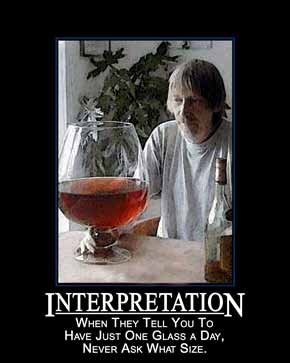
Wine tasting can be both fun and responsible.
We've all seen the wine taster who's had a few tastes too many. It's always a bit disconcerting to wonder if that person is driving in the lane next to us on the way home. Besides the obvious safety and legal ramifications of going overboard with wine consumption, there are also practical consequences: a hang-over, the inability to distinguish one wine from another or making wine purchases we'd never make if we were clear headed.
By the time we are mature enough to appreciate (and afford) fine wine, we are usually too old for those "pub crawls" of spring breaks past. Still, it's easy for "another taste" to lead to another and another... That adds up quickly.
You can stay in control and get more out of the wine tasting experience by practicing "S to the fourth power": Swirl, Sniff, Sip and Spit. The great thing about wine tasting is that it's one of the few occasions when you can break etiquette and spit. In wine country or at a festival all you need to do is ask for a spit cup. This is strongly advised if you don't want to hazard getting back-splash from the dump bucket. Keep the cup close to your mouth.
Spitting your wine takes a bit of practice. You can develop a confident spitting technique in the shower or after brushing your teeth: take a small mouthful of water (or mouthwash) and expel it in a steady, even stream. Don't rush or be too forceful and you won't spray.
It isn't about being stuffy or snooty. It's about having fun while being responsible and staying safe. It's an attitude and a frame of mind. We hope it will be an idea that spreads to all wine lovers.
Red Wine Buzz
Friday, June 6, 2008
"When Big Is Better"
Large Capacity Wine Bottles
While most people are most familiar with 750 mL full-size bottles and 375 mL half-bottles, one occasionally encounters bottle names that sound vaguely Biblical (aside of invoking a mental image of a large caliber handgun).
The larger capacity bottle sizes contain volumes in multiples of the standard 750 mL full-size bottle. These sizes can be as large as 50 liters (67 standard bottles) but such bottles are very rare. It is not clear just how these large capacity bottles came to be used, but they offer the advantage of greater longevity - since there is less air n the bottle, relative to the volume of wine.
Just when it seems that this subject is simple enough, it turns out a few of the names (taken from biblical kings of the Old Testament) can refer to different sizes, depending on wine making region. However, more often than not, producers around the globe follow the Burgundian nomenclature. So here goes:...
CAPACITY
1X / 0.75L Standard, Full size.
2X / 1.5L Magnum - universally used.
3X / 2.25L Marie-Jeanne - used in Bordeaux only.
4X / 3.0L Double Magnum - used in Bordeaux.
Jéroboam - used in Burgundy and Champagne.
6X / 4.5L Jéroboam - in Bordeaux.
Rehoboam - in Burgundy and Champagne.
8X / 6.0L Impériale - used in Bordeaux only.
Methusaleh - used in Burgundy and Champagne.
12X / 9.0L Salmanazar - used in Burgundy and Champagne.
16X / 12.0L Balthazar - used in Burgundy and Champagne.
20X / 15.0L Nebuchadnezzar - used in Burgundy and Champagne
Red Wine Buzz
While most people are most familiar with 750 mL full-size bottles and 375 mL half-bottles, one occasionally encounters bottle names that sound vaguely Biblical (aside of invoking a mental image of a large caliber handgun).
The larger capacity bottle sizes contain volumes in multiples of the standard 750 mL full-size bottle. These sizes can be as large as 50 liters (67 standard bottles) but such bottles are very rare. It is not clear just how these large capacity bottles came to be used, but they offer the advantage of greater longevity - since there is less air n the bottle, relative to the volume of wine.
Just when it seems that this subject is simple enough, it turns out a few of the names (taken from biblical kings of the Old Testament) can refer to different sizes, depending on wine making region. However, more often than not, producers around the globe follow the Burgundian nomenclature. So here goes:...
CAPACITY
1X / 0.75L Standard, Full size.
2X / 1.5L Magnum - universally used.
3X / 2.25L Marie-Jeanne - used in Bordeaux only.
4X / 3.0L Double Magnum - used in Bordeaux.
Jéroboam - used in Burgundy and Champagne.
6X / 4.5L Jéroboam - in Bordeaux.
Rehoboam - in Burgundy and Champagne.
8X / 6.0L Impériale - used in Bordeaux only.
Methusaleh - used in Burgundy and Champagne.
12X / 9.0L Salmanazar - used in Burgundy and Champagne.
16X / 12.0L Balthazar - used in Burgundy and Champagne.
20X / 15.0L Nebuchadnezzar - used in Burgundy and Champagne
Red Wine Buzz


"Fighting wine ignorance one person at a time"
Learning module - Ageing Wine
Many readers want to know how their wine will (or can) age. Most wines today are made to be consumed within a short period after release. They are often made from very ripe grapes (with low acidity and ripe, soft tannins) in order to be more immediately accessible. This comes at the cost of longevity. The goal in this approach to wine making is an immediately satisfying wine rather than the deferred gratification of a complex and nuanced wine after extended cellaring.
Determining how long a wine will age is often a gamble. Ultimately, it is not possible to absolutely and precisely predict the lifespan of a wine. This module details the redwinebuzz.com approach to estimating a wine's longevity.
Three loose rules of thumb.
One common rule of thumb for estimating longevity is that however long a wine takes to reach peak maturity is the length of time it will taste its best. Obviously, some wines, even red wines, reach maturity quickly. Nonetheless, one can roughly project the life term of a wine by considering its level of maturity and integration against its current age. At this point, some experience is necessary to serve as a reference point of when a particular wine from a specific region is at its peak.
Another way of gauging age worthiness is to consider the the degree of maturity or development of a wine at the time it is tasted as compared to its character just after it was bottled. One can think of similar wines (already tasted) from the same region or vineyard, producer and vintage as reference wines. Young wines are generally exuberant and bursting with flavors and energy. They may go through a phase where they are closed, and austere but then, with age, they blossom. The taster has to think about how lively and youthful a particular wine tastes at a given time. One has to use their experience to estimate a period of time necessary for a wine to "calm down", integrate and reach the level of maturity typical of its style and region. Fine, mature wines are composed, graceful, nuanced and integrated. Wines past their prime are dull, withered and faded. One has to consider how long a given wine has take to reach its particular stage of evolution in the bottle. The shorter the time between harvest and peak maturity, the shorter the overall lifespan. This, of course, requires some experience in wines in general and the wines from the same year and growing region as the wine in question.
There is some disagreement about the value of using the the length of time a wine needs to unwind or open up in the decanter as an indicator of longevity. We prefer to look at another character of a given wine during assessment. This involves leaving some wine out overnight - in an opened bottle and in a glass. The degree of decline overnight gives an indication of age worthiness. If the wine is as vibrant and lively (or more so) the following morning, then this tends to indicate that it will last for at least several years when cellared properly. This process helps approximate or simulate the changes seen with ageing and is based on the concept of a wine's reductive capacity or reserve - the ability of its ingredients to withstand oxidation with minimal change or deterioration. If the wine tastes oxidized and falls apart by the morning, it is not likely to be good past one to three years (at most) with optimal cellaring.
Taking it apart for deductive approach.
Some wines do display hallmark characteristics indicative of longevity. In general, in order for a wine to last over the years it must have sufficient levels of flavor compounds (extract), acidity and tannins.
The younger the wine, the fresher, more vibrant, exuberant, more concentrated and less integrated its fruit aromas and flavors are. (Concentration should not be confused with sweetness or body). Fruit flavors fade with time. Big, exuberant aromas and flavors early in a wine's life are not enough. The wine has to be made from grapes picked at the right time (growing location and weather play a role too). Wines made from over-ripe grapes do not age into graceful, fine elixirs nor do they have the same longevity as wines made from grapes picked based on prudent harvesting decisions. Each variety has its signature or characteristic aromas that distinguish it as a Cabernet sauvignon or a Syrah or a Pinot Noir. There is some variation depending on clones in the vineyard, location and weather. The small differences notwithstanding, this distinguishing character is called varietal typicity. However, the more distinct and typical of the best examples of the variety (in its youth) the aromas are (allowing for clonal variation and blending of different clones in the finished wine), the more likely the fruit was grown in the right place, the vintage was favorable and the fruit was picked at the right time to make an age worthy wine.
The flavor and aroma compounds in ample supply are not enough. Something needs to preserve them. This is thought to be accomplished by acidity and tannins. High acidity (high TA and low pH) contribute to a wine's longevity. The younger the grape at harvest, the higher the acid levels. While good acidity (high TA and low pH) are useful indications, the nature of the grape that must be considered. A Pinot should have higher acidity than a Syrah. Finally, one must take care to not confuse the acidity of the finished wine with the acids in the grapes at the time of harvest. Acidulation, a commonly used technique, is the addition of certain acids (which occur naturally in grapes) to the fermenting wine to perk up its acidity. A wine made this way will age differently than one with naturally high acids.
Tannins are the third factor in the longevity equation. They are present in far greater quantities in red wine grapes. Hence the tendency of red wines to have greater longevity. This group of chemicals includes the molecules responsible for color aroma and flavor. They come from the skins, the seeds and stems (if whole cluster fermentation is performed). All evolve as the grape matures. Seeds turn from green to yellow to brown as the grape matures and senesces. Stems go from plump, firm and green to soft and withered and then dry and become brown with time brown. Along each point in this evolution, different flavor and texture characteristics of tannins can be seen. In seeking to define "physiologic ripeness" tannins have been generally divided into "green"' and "ripe" categories. This is a generalization and, as such, is as limiting or misleading as it is helpful. There are vague associations of green as astringent and bitter and ripe as supple or smooth, but those are generalizations do not give all the answers.
It is important, at this point, to distinguish between “astringent” and “bitter”. Astringent is the dry, puckery feeling of a thirsty sponge sucking up all the water from your mouth (see here for a longer discussion). It is a tactile sensation. Bitter, on the other hand, is a flavor and is sensed at the back of the tongue. It can contribute to a hard, harsh or rough character of the tannins, but one must first look at the two qualities separately before making a final assessment of a wine's tannins. Astringency, as a characteristics of tannins, is due to their tendency to bind proteins. This is why big, red wines like Barolos, Syrahs, Petit Syrahs and Cabernet-based blends (which are very tannic) go well with red meat – which is is big on protein. The younger the wine with long cellaring potential is, the more astringent (but not necessarily bitter) it generally is. Bitterness will probably not change much. Getting a sense of where the wine's tannins are in their evolution - relative to the acidity and level of development in the fruit - by examining their astringency and texture is our approach to estimating age worthiness.
Although there is some research now suggesting otherwise, younger tannins are believed to be not polymerized (combined into chains or clusters of chains of the same molecule), or at least polymerized to a lesser degree than older tannins. Each tannin molecule has more places on it where it can bind to proteins. Since young tannins are thought to be non-polymerized, or polymerized to a lesser degree, they are believed to feel more astringent than they do in the same wine after some aging. They produce this astringent sensation by binding to the salivary proteins and to the proteins on the surface of the cells lining your mouth. This compromises the ability of saliva to lubricate the mouth. The intensity of the resulting astringent sensation is thought to be proportional to both the total amount of tannins and the degree to which they are not polymerized.
Wine is believed to be a very active chemical system in constant flux. Tannins are believed to polymerize with time in the bottle (forming a sediment on the side of the bottle) and become silkier, supple and less astringent as a result. Evidence exists that there is both polymerization and de-polymerization of tannins occurring in wine at the same time. In the very slow process of polymerization, it may be that tannins they take up the oxidative chemicals in the wine. This in turn may be a basis (at least in part) of how tannins preserve the other components of a wine. Before a wine is bottled, it spends some time in a barrel. Air slowly seeps in through the grain of the wood of the barrel. Because this process mellows a wine, it is thought that the oxygen which bleeds into the barrel interacts with the tannins, and helps them polymerize. This is can be augmented or accelerated by micro-oxygenation (slowly infusing minute amounts of oxygen into wine) which to softens and mellows a wine. This is not a very well understood process. By comparison, délestage is a tannin management method whose goal is to reduce or eliminate bitter or "green tasting" tannins.
In assessing a wine's tannins one must look at both astringency and bitterness but not confuse the two. When one thinks of the level astringency and texture of the tannins in the context of the wine's age and method's used in making it, a general sense of longevity can be gained.
Final points.
All this speculation is contingent on proper cellar conditions. These include: a steady temperature of 55-60 degrees Fahrenheit, about 60% relative humidity, darkness and protection form vibration (wine bottles should not be turned periodically as some suggest). Room temperature is problematic, particularly in the summer. When wine reaches a temperature of 80 degrees Fahrenheit, it begins to "cook". This is not in the bubbling and boiling sense but, rather, it refers to a rapid deterioration of flavor components resulting in a "cooked" flavor profile. Additionally frequently alternating temperatures between two extremes are also detrimental to longevity.
Finally, closures are very influential. Screw caps and crown caps form the tightest seal resulting in the slowest rate of oxygen entry. They are essentially on par with natural cork closures. Synthetic cork closures, on the other hand, actually allow the highest rate of oxygen entry in to the bottle of all types of closures. The faster oxygen enters a bottle, the faster the evolution and decline of the wine inside. While it is not clear how screw caps and crown caps can perform (in the long term) in a cellar, they are used primarily because they deliver a stable and fresh wine to the consumer by preventing rapid deterioration.
Red Wine Buzz
Many readers want to know how their wine will (or can) age. Most wines today are made to be consumed within a short period after release. They are often made from very ripe grapes (with low acidity and ripe, soft tannins) in order to be more immediately accessible. This comes at the cost of longevity. The goal in this approach to wine making is an immediately satisfying wine rather than the deferred gratification of a complex and nuanced wine after extended cellaring.
Determining how long a wine will age is often a gamble. Ultimately, it is not possible to absolutely and precisely predict the lifespan of a wine. This module details the redwinebuzz.com approach to estimating a wine's longevity.
Three loose rules of thumb.
One common rule of thumb for estimating longevity is that however long a wine takes to reach peak maturity is the length of time it will taste its best. Obviously, some wines, even red wines, reach maturity quickly. Nonetheless, one can roughly project the life term of a wine by considering its level of maturity and integration against its current age. At this point, some experience is necessary to serve as a reference point of when a particular wine from a specific region is at its peak.
Another way of gauging age worthiness is to consider the the degree of maturity or development of a wine at the time it is tasted as compared to its character just after it was bottled. One can think of similar wines (already tasted) from the same region or vineyard, producer and vintage as reference wines. Young wines are generally exuberant and bursting with flavors and energy. They may go through a phase where they are closed, and austere but then, with age, they blossom. The taster has to think about how lively and youthful a particular wine tastes at a given time. One has to use their experience to estimate a period of time necessary for a wine to "calm down", integrate and reach the level of maturity typical of its style and region. Fine, mature wines are composed, graceful, nuanced and integrated. Wines past their prime are dull, withered and faded. One has to consider how long a given wine has take to reach its particular stage of evolution in the bottle. The shorter the time between harvest and peak maturity, the shorter the overall lifespan. This, of course, requires some experience in wines in general and the wines from the same year and growing region as the wine in question.
There is some disagreement about the value of using the the length of time a wine needs to unwind or open up in the decanter as an indicator of longevity. We prefer to look at another character of a given wine during assessment. This involves leaving some wine out overnight - in an opened bottle and in a glass. The degree of decline overnight gives an indication of age worthiness. If the wine is as vibrant and lively (or more so) the following morning, then this tends to indicate that it will last for at least several years when cellared properly. This process helps approximate or simulate the changes seen with ageing and is based on the concept of a wine's reductive capacity or reserve - the ability of its ingredients to withstand oxidation with minimal change or deterioration. If the wine tastes oxidized and falls apart by the morning, it is not likely to be good past one to three years (at most) with optimal cellaring.
Taking it apart for deductive approach.
Some wines do display hallmark characteristics indicative of longevity. In general, in order for a wine to last over the years it must have sufficient levels of flavor compounds (extract), acidity and tannins.
The younger the wine, the fresher, more vibrant, exuberant, more concentrated and less integrated its fruit aromas and flavors are. (Concentration should not be confused with sweetness or body). Fruit flavors fade with time. Big, exuberant aromas and flavors early in a wine's life are not enough. The wine has to be made from grapes picked at the right time (growing location and weather play a role too). Wines made from over-ripe grapes do not age into graceful, fine elixirs nor do they have the same longevity as wines made from grapes picked based on prudent harvesting decisions. Each variety has its signature or characteristic aromas that distinguish it as a Cabernet sauvignon or a Syrah or a Pinot Noir. There is some variation depending on clones in the vineyard, location and weather. The small differences notwithstanding, this distinguishing character is called varietal typicity. However, the more distinct and typical of the best examples of the variety (in its youth) the aromas are (allowing for clonal variation and blending of different clones in the finished wine), the more likely the fruit was grown in the right place, the vintage was favorable and the fruit was picked at the right time to make an age worthy wine.
The flavor and aroma compounds in ample supply are not enough. Something needs to preserve them. This is thought to be accomplished by acidity and tannins. High acidity (high TA and low pH) contribute to a wine's longevity. The younger the grape at harvest, the higher the acid levels. While good acidity (high TA and low pH) are useful indications, the nature of the grape that must be considered. A Pinot should have higher acidity than a Syrah. Finally, one must take care to not confuse the acidity of the finished wine with the acids in the grapes at the time of harvest. Acidulation, a commonly used technique, is the addition of certain acids (which occur naturally in grapes) to the fermenting wine to perk up its acidity. A wine made this way will age differently than one with naturally high acids.
Tannins are the third factor in the longevity equation. They are present in far greater quantities in red wine grapes. Hence the tendency of red wines to have greater longevity. This group of chemicals includes the molecules responsible for color aroma and flavor. They come from the skins, the seeds and stems (if whole cluster fermentation is performed). All evolve as the grape matures. Seeds turn from green to yellow to brown as the grape matures and senesces. Stems go from plump, firm and green to soft and withered and then dry and become brown with time brown. Along each point in this evolution, different flavor and texture characteristics of tannins can be seen. In seeking to define "physiologic ripeness" tannins have been generally divided into "green"' and "ripe" categories. This is a generalization and, as such, is as limiting or misleading as it is helpful. There are vague associations of green as astringent and bitter and ripe as supple or smooth, but those are generalizations do not give all the answers.
It is important, at this point, to distinguish between “astringent” and “bitter”. Astringent is the dry, puckery feeling of a thirsty sponge sucking up all the water from your mouth (see here for a longer discussion). It is a tactile sensation. Bitter, on the other hand, is a flavor and is sensed at the back of the tongue. It can contribute to a hard, harsh or rough character of the tannins, but one must first look at the two qualities separately before making a final assessment of a wine's tannins. Astringency, as a characteristics of tannins, is due to their tendency to bind proteins. This is why big, red wines like Barolos, Syrahs, Petit Syrahs and Cabernet-based blends (which are very tannic) go well with red meat – which is is big on protein. The younger the wine with long cellaring potential is, the more astringent (but not necessarily bitter) it generally is. Bitterness will probably not change much. Getting a sense of where the wine's tannins are in their evolution - relative to the acidity and level of development in the fruit - by examining their astringency and texture is our approach to estimating age worthiness.
Although there is some research now suggesting otherwise, younger tannins are believed to be not polymerized (combined into chains or clusters of chains of the same molecule), or at least polymerized to a lesser degree than older tannins. Each tannin molecule has more places on it where it can bind to proteins. Since young tannins are thought to be non-polymerized, or polymerized to a lesser degree, they are believed to feel more astringent than they do in the same wine after some aging. They produce this astringent sensation by binding to the salivary proteins and to the proteins on the surface of the cells lining your mouth. This compromises the ability of saliva to lubricate the mouth. The intensity of the resulting astringent sensation is thought to be proportional to both the total amount of tannins and the degree to which they are not polymerized.
Wine is believed to be a very active chemical system in constant flux. Tannins are believed to polymerize with time in the bottle (forming a sediment on the side of the bottle) and become silkier, supple and less astringent as a result. Evidence exists that there is both polymerization and de-polymerization of tannins occurring in wine at the same time. In the very slow process of polymerization, it may be that tannins they take up the oxidative chemicals in the wine. This in turn may be a basis (at least in part) of how tannins preserve the other components of a wine. Before a wine is bottled, it spends some time in a barrel. Air slowly seeps in through the grain of the wood of the barrel. Because this process mellows a wine, it is thought that the oxygen which bleeds into the barrel interacts with the tannins, and helps them polymerize. This is can be augmented or accelerated by micro-oxygenation (slowly infusing minute amounts of oxygen into wine) which to softens and mellows a wine. This is not a very well understood process. By comparison, délestage is a tannin management method whose goal is to reduce or eliminate bitter or "green tasting" tannins.
In assessing a wine's tannins one must look at both astringency and bitterness but not confuse the two. When one thinks of the level astringency and texture of the tannins in the context of the wine's age and method's used in making it, a general sense of longevity can be gained.
Final points.
All this speculation is contingent on proper cellar conditions. These include: a steady temperature of 55-60 degrees Fahrenheit, about 60% relative humidity, darkness and protection form vibration (wine bottles should not be turned periodically as some suggest). Room temperature is problematic, particularly in the summer. When wine reaches a temperature of 80 degrees Fahrenheit, it begins to "cook". This is not in the bubbling and boiling sense but, rather, it refers to a rapid deterioration of flavor components resulting in a "cooked" flavor profile. Additionally frequently alternating temperatures between two extremes are also detrimental to longevity.
Finally, closures are very influential. Screw caps and crown caps form the tightest seal resulting in the slowest rate of oxygen entry. They are essentially on par with natural cork closures. Synthetic cork closures, on the other hand, actually allow the highest rate of oxygen entry in to the bottle of all types of closures. The faster oxygen enters a bottle, the faster the evolution and decline of the wine inside. While it is not clear how screw caps and crown caps can perform (in the long term) in a cellar, they are used primarily because they deliver a stable and fresh wine to the consumer by preventing rapid deterioration.
Red Wine Buzz
Explanatation of The Basic Terms on French Wine Labels
AC
Appellation Contrôlée
AOC
Appellation d'Origine Contrôlée
Barrique
225 litre oak cask
Blanc de blanc
White wine from white grapes
Blanc de Noirs
White wine from black grapes
Brut
Dry (usually for sparking wines)
Cave
Cellar
Cave coopératif
Cooperative cellar
Cépage
Grape variety
Château
Property usually making/bottling its own wine
Clos
Walled vineyard
Commune
Village
Côte
Slope of a hill
Crémant
Sparkling
Cru
Growth from a specific vineyard
Cru Bourgeois
Classification used for Médoc properties
Cru Classé
Classed growth
Cuve
Wine vat or tank
Cuve Close
Bulk method for sparkling wine making
Cuvée
Blend
Demi-Sec
Semi-dry
Domaine
Property usually making/bottling its own wine
Doux
Sweet
Élevage
Maturation & pre bottling treatment
Foudre
Large wooden vat
Fût
Small oak cask
Grand Vin
Château's main wine
Grand Cru
Great growth highest vineyard classification
Grand Cru Classé
Classed great growth
Grande marque
Champagne house
Marque
Brand
Méthode champenoise
Champagne method of making sparkling wine
Mis en bouteille
Bottled
Moelleux
Fairly sweet
Monopole
Exclusive brand name
Négociant
Merchant
Pétillant/Pétillance
A light sparkle
Premier Cru
First growth, 2nd highest vineyard classification
Récolte
Harvest or vintage
Réserve
A superior wine
Sec
Dry
Sous marque
Secondary brand
Tete de Cuvée
Wine from first pressing
Vendange
Harvest or vintage
Vigneron
Vine grower
Vin de Pays
Country wine
Vin de Table
Table wine
Appellation Contrôlée
AOC
Appellation d'Origine Contrôlée
Barrique
225 litre oak cask
Blanc de blanc
White wine from white grapes
Blanc de Noirs
White wine from black grapes
Brut
Dry (usually for sparking wines)
Cave
Cellar
Cave coopératif
Cooperative cellar
Cépage
Grape variety
Château
Property usually making/bottling its own wine
Clos
Walled vineyard
Commune
Village
Côte
Slope of a hill
Crémant
Sparkling
Cru
Growth from a specific vineyard
Cru Bourgeois
Classification used for Médoc properties
Cru Classé
Classed growth
Cuve
Wine vat or tank
Cuve Close
Bulk method for sparkling wine making
Cuvée
Blend
Demi-Sec
Semi-dry
Domaine
Property usually making/bottling its own wine
Doux
Sweet
Élevage
Maturation & pre bottling treatment
Foudre
Large wooden vat
Fût
Small oak cask
Grand Vin
Château's main wine
Grand Cru
Great growth highest vineyard classification
Grand Cru Classé
Classed great growth
Grande marque
Champagne house
Marque
Brand
Méthode champenoise
Champagne method of making sparkling wine
Mis en bouteille
Bottled
Moelleux
Fairly sweet
Monopole
Exclusive brand name
Négociant
Merchant
Pétillant/Pétillance
A light sparkle
Premier Cru
First growth, 2nd highest vineyard classification
Récolte
Harvest or vintage
Réserve
A superior wine
Sec
Dry
Sous marque
Secondary brand
Tete de Cuvée
Wine from first pressing
Vendange
Harvest or vintage
Vigneron
Vine grower
Vin de Pays
Country wine
Vin de Table
Table wine
"Grenache is the Paris Hilton of grape varieties"

Peter Grogan on a grape that brings out the best in others
Everybody's heard of it but nobody seems to quite know why.
'Grenache is relatively low in tannins and this lets its pure fruit flavours shine through'
There the comparison should end, though, because it's a grape with real substance which has landed leading roles in universally acclaimed classics like Châteauneuf-du-Pape and Rioja.
It's a character actor that makes wine in a broad range of styles. It's the perfect grape for a themed dinner party, as its repertoire runs from succulent summer rosés and classy dry whites (from its cousin grenache blanc), through to full-bodied reds and sumptuous sweet wines.
Grenache is also the second most widely-planted grape variety on the planet. (Most people think cabernet sauvignon is the biggest, but this title goes to airén, which makes oceans of Spanish brandy.)
The variety thrives in the poorest soils where it needs to send its roots way down in search of moisture and the precious minerals which provide its serious side and offset the eager-to-please "Juicy Fruit" part of its character.
The grapes are relatively low in tannins - the same mouth-puckering compounds found in a stewed pot of tea - and this is what lets the pure fruit flavours shine through.
Unblended, grenache makes ripe, round wines with a touch of sweetness that's often described as "jammy." It wasn't luck that got its name in lights, though, but its abilities as an ensemble player by bringing out the best in other grapes.
This, and the fact that until very recently the French have disdained to mention grape varieties on their wine labels, are the reasons for the low-profile of this most clubbable of grapes.
CHÂTEAUNEUF-DU-PAPE AND THE CÔTES-DU-RHÔNE
The southern Rhône's Châteauneuf-du-Pape region makes rather grand wines and its demarcation (in 1923) provided the prototype for the whole appellation contrôlée system.
Grenache reigns supreme although producers may use any, or all, of the 13 permitted grape varieties (of which five, surprisingly, are white). Among my favourite red wines, the best are rich and complex.
A word of warning, though. Overall standards are much improved, but it's still not an appellation that anyone should buy randomly, especially with prices starting at around £10. Gamey, mature Clos de l'Oratoire des Papes 2001 (£19.99; Majestic) - full black-olives and spice - shows what it's all about.
A tip worth remembering is that a number of top Châteauneuf producers make wines that, whether by accident or design, have to be sold under less exalted appellations. Among the accidents is Gérard Charvin, through whose vineyard the perimeter of the demarcation runs.
Try as he might, the fonctionnaires refuse to re-draw the boundary so he has to sell half his crop as Châteauneuf while the other half must be called lowly Côtes-du-Rhône.
The price isn't so lowly, at about £10.50, and if you want to hunt down bargains like this you often have to buy a case (Fine & Rare Wines: 020 8960 1995) but the black-cherries-in-kirsch flavours are better than most Châteauneufs at twice the price.
By design, Domaine de Pégaü blend the best wines from the wrong side of the tracks to make a roistering, brambly vin de table, Plan de Pegaü, that is anything but humble (£7.99; Majestic).
PROVENCE AND THE PAYS D'OC
Most of the rosés that taste so good on a sweltering Provençal hillside and never quite the same back home are made from grenache.
If they're from producers like Domaine de la Mordorée in Tavel though, (£12.95; H&H Bancroft 020 7232 5440) they are, for my money, the world's best pink wines. Surprisingly complex but with plenty of stuffing, they're perfect for high-testosterone barbecues.
At its best, grenache blanc makes big, multi-faceted dry whites with floral and appley aromas that lead into lingering white-fruit and mineral flavours. At £5.49, Marks & Spencer have a cracking example which finishes with a twist of allspice.
Heading West, a stone's-throw from the Spanish border, the chocolate-friendly wines of Banyuls are a gift to lovers of sweet wines. All about nuts, toffee and spice, complex, age-worthy wines like Domaine La Tour Vieille Reserva (£13.95; Yapp Brothers 01747 860423) are often a serious bargain.
SPAIN AND ELSEWHERE
The Spanish, as slow to name names as the French where grapes are concerned, know grenache as garnacha, or garnatxa in Navarra, where no Basque-ified word is complete without at least one "x" and preferably a "z" or two.
Grenache is the cornerstone there and in up-and-coming Priorato. It also gets the award for best supporting actor in Rioja, providing the richness to broaden out the darker, denser tones of tempranillo. The gushing, crimson Gran Tesoro 2006 (an irresistible £3.19 at Tesco) comes from the rather more obscure Campo de Borja region but at this price, and with these mulberry aromas and perky, plum flavours, who cares?
In the Eighties, the Australians grubbed-up acres of grenache to plant even more cabernet sauvignon. Now they cherish the remainder and are re-planting with promising results.
Sardinia's finest wine, Turriga, is a dark and uncharacteristically macho style of grenache which is gaining cult status (£39.95 Sussex Wine Company 01273 477205). The grape does business here under the alias of canonau but once you get a taste for it you'll know grenache anywhere.
Champagne's solo act
Single-vineyard bottlings allow France's revered houses to buck tradition
Ask a Champagne lover to name the greatest house in Champagne, and the answer will often be Krug. One of the region's most famous producers, Krug produces rich, regal wines defined by the quality and complexity of its blends - a typical Krug Grande Cuvee might include up to 100 different wines from six to 10 vintages, drawn from its legendary stock of reserves.
Recently, Krug released a new wine, the 1995 Clos d'Ambonnay - not a blend but made exclusively from a single vineyard. This isn't Krug's first single-vineyard wine: Since the 1979 vintage, it has produced a rare and luxurious single-vineyard Blanc de Blancs made entirely from Chardonnay grapes from the Clos du Mesnil, and the Clos d'Ambonnay is intended to be a Pinot Noir counterpart. However, it's Krug's first new wine since the 1979 Clos du Mesnil was first offered in 1986.
It might seem ironic, even contradictory, that a house known for its mastery of blending has chosen to release another unblended wine from a single parcel. Olivier Krug, director of the house, acknowledges as much, but he says, "This wine has an extraordinary character and personality, and also a quality that is up to the Krug standard." The astonishingly high price tag of the Clos d'Ambonnay, suggested at $3,500 a bottle, means that few people will ever get to taste it. Yet it demonstrates Krug's awareness of the growing interest in Champagne's terroir.
Krug is not alone. A growing number of single-vineyard Champagnes are being made, although they still remain a niche product. In 2004 Billecart-Salmon released the 1995 Clos St-Hilaire, from a parcel in Mareuil-sur-Ay just behind the winery, and a year later Taittinger unveiled Les Folies de la Marquetterie, from the vineyard around its chateau in the village of Pierry. Even Moet & Chandon, Champagne's largest producer, attempted three single-vineyard wines, although they were discontinued.
Terroir-driven
The appearance of Champagnes like these marks a departure from tradition. In a region long content with discussing terroir on a macroscopic scale, an ever greater number of wineries are willing to explore a sense of micro-identity - a single village, or even a lone vineyard. In turn, there is a growing awareness among consumers that Champagne can be a highly terroir-specific wine just like any other. This shift in attitude is significant, since, in effect, a micro-terroir wine is the very antithesis of conventional Champagne. Whereas a conventional blend seeks to tame wines that have too strong of a personality, subduing their character into a greater collective in order to create a particular house style, a micro-terroir Champagne thrives on its originality of character and encourages its expression to the fullest.
The concept of Champagne from one specific place is not entirely new. In 1921, Eugene-Aime Salon created the Champagne that bears his name, producing it entirely from Chardonnay and entirely from the village of Le Mesnil-sur-Oger, which was a radical idea for the time. Today, Salon is one of Champagne's most revered and exclusive wines. For many, this elegant and refined Champagne has come to epitomize the character of Le Mesnil.
In Champagne, however, each village is composed of dozens of different lieux-dits, or named vineyards, just as in Burgundy. While Salon is a classic example of a single-village Champagne, there have been famous examples of single-vineyard Champagnes as well, even more geographically precise in their expression of a specific piece of land.
The oldest, and still the greatest, is Philipponnat's Clos des Goisses, from a steep, south-facing vineyard in Mareuil-sur-Ay considered to be one of the finest sites in the entire region. Champagne house Philipponnat has owned this vineyard since 1935, and it has always been bottled separately as a vintage-dated, single-vineyard Champagne. Another historically famous site, the Clos du Moulin in the village of Ludes, has been the source of Cattier's superb single-vineyard Champagne since 1952; among those to follow in later years was Krug, with its Clos du Mesnil.
Many other single-vineyard wines are found among grower estates, who produce wine from their own vines and work on a smaller scale of production than the large negociant houses, which blend fruit from many different growers and areas.
The estate of Jean Milan, for example, produces exclusively single-village wines, grown entirely in its home village of Oger. Since 1985, the estate has made a Champagne from the Terres de Noel, a renowned vineyard located next to the estate.
"It was an unusual idea at the time," says Caroline Milan of her grandfather Jean's decision to bottle the Terres de Noel separately. "Historically the vineyard has always had a high reputation. The wine is always very particular. But also, the Terres de Noel is a sort of emblem of the estate, since our house is right here."
Although the quantity of wine will always be small, Milan hopes to produce it more frequently in the future. "It's interesting to make a Terres de Noel every year, even if it's only 3,000 bottles. It's a kind of photograph of the site and the vintage."
Single-vineyard success
So what does it take to make good single-vineyard Champagne?
"First and foremost it requires a special bit of dirt or something that elevates an average bit of dirt," says author and Champagne expert Tom Stevenson. "Clos des Goisses is so special that even in the region's worst vintages it can produce great Champagne capable of aging 50 years."
The concept of place often called terroir, however, is not only about dirt, and Stevenson notes that other factors can contribute to a successful wine. "Without its walls and the protection and warmth of encroaching buildings, Clos du Mesnil would not make particularly good Champagne, but with the wall it makes a special Champagne," he says.
However, the creation of a micro-terroir Champagne - whether single vineyard or single village - also requires a certain volition on the part of a winegrower, a willingness to defy the traditional practice of blending that has historically defined Champagne.
Perhaps the main reason that more single-vineyard or even single-village Champagnes aren't being made is that, historically, neither producers nor consumers were accustomed to the idea. It wasn't the way that Champagne was marketed or branded. As American importer Terry Theise writes in his 2007 Champagne catalog, "Why do we assume Champagne must be a trans-regional blend? Because (the big houses have) lulled us into such complacency we simply haven't thought about it."
Expressing identity
Among those who do think about it is Pascal Leclerc, proprietor of the Leclerc Briant estate in Epernay, who has been making single-vineyard wines since 1990. The boldness of Leclerc's vision lies not only in creating a single-vineyard wine, but in presenting a collection of three, all from the village of Cumieres. Leclerc feels that the individual identities of each parcel - Les Chevres Pierreuses, Les Crayeres and Clos des Champions - are distinct enough to warrant their isolation. "When we tasted the still wines each year," he says, "these parcels always stood out, consistently demonstrating particular characters and qualities, and so we eventually decided to bottle them separately."
While the inaugural examples of the three wines were from the 1990 vintage, subsequent releases have always been a blend of at least two vintages, in order to minimize the effect of the year. "We want the wines to express the terroir, not the vintage," says Leclerc. In 2007, the estate added two more single-vineyard wines: a Blanc de Blancs from La Croisette, in Epernay, and a 100 percent Pinot Meunier from La Ravinne in Verneuil.
As Leclerc points out, the issue of identity is at the heart of the idea of a single-parcel Champagne. In a blend, the identities of different wines are used as means to achieve a further goal; for a micro-terroir Champagne, the expression of identity is an end in itself.
At times, this expression can startle those accustomed to the more reserved harmony of blended Champagne. A single-vineyard Champagne such as Larmandier-Bernier's Vieille Vigne de Cramant or Egly-Ouriet's Blanc de Noirs possesses an unmitigated, intensely minerally character and a highly personalized sense of place that is closer in spirit to a still wine from Burgundy than to traditional Champagne. It challenges assumptions of what Champagne is and what it is capable of.
One of the most outspoken advocates of terroir-driven Champagne is Anselme Selosse, proprietor of Champagne Jacques Selosse in the village of Avize, who has developed a near-cult following for his powerful, expressive wines. "A wine shouldn't merely be good to drink - there are lots of things that taste good," says Selosse. "A wine should have a unique character and identity. It should be original. To be original means that it is abnormal. It is not normal - it is differentiated from other things of its type." The primary element that differentiates one wine from another is the place where it is grown, and for Selosse, expressing the character of this place is the paramount goal.
Selosse's wines are demanding, intense and uncompromisingly original. For his rare, single-vineyard Champagne called Contraste, made entirely of Pinot Noir from La Cote Faron in the village of Ay, he employs an unusual solera system, similar to that used in sherry: A portion of each harvest is added to an existing blend first established in 1994, creating a multi-vintage wine that expresses what he calls "a memory of the terroir." His vintage Blanc de Blancs is intended to convey the character of Avize, and is a combination of two parcels, the steep, south-facing Le Mont de Cramant and the shallower Les Chantereines. The two are deliberately blended to reflect Avize's two types of soils: chalk and clay. "For me, Avize is both of these things," insists Selosse.
Wines like these are at the forefront of Champagne's movement toward a more precise expression of terroir. It's fueled by an increasing interest among growers in artisanal identity, particularly among the newer generation, and also by an increasing awareness among consumers that Champagne is a wine like any other, capable of the same detail and expression of place.
Artisanal vs. industrial
It's possible that even the large established houses will rethink their methods, and it's not inconceivable that Champagne's biggest names could attempt more micro-terroir Champagnes in the future. As Selosse says, "The difference between artisanal and industrial is not one of size. The difference lies in the approach - an artisanal approach seeks to express identity and individuality, whereas an industrial one produces mass objects, all of the same type."
A particularly striking example of an established house embracing just this artisanal approach is Jacquesson, in the village of Dizy. Founded in 1798, Jacquesson had already long enjoyed a stellar reputation as one of Champagne's greatest houses. There was no need for Jacquesson's proprietors, the brothers Jean-Herve and Laurent Chiquet, to change a thing. Even so, today they are radically restructuring their portfolio, identifying specific, high-quality vineyard sites. "As we were improving our farming," says Jean-Herve Chiquet, "we began to rediscover the values of our terroirs."
The result is the creation of three single-vineyard, vintage-dated Champagnes, all from parcels owned by the house: a pure Chardonnay from the Corne Bautray vineyard, in the village of Dizy; a Chardonnay from Champs Cain, in Avize; and a Pinot Noir from Vauzelle Terme, in Ay. The full scope of the Chiquets' efforts won't be fully observable until 2010, when the 2002s are released as a collection. Their blended nonvintage wine still exists, of course, as does a blended vintage wine. Yet it's clear that the house's new identity is shaped in large part by the single-vineyard projects.
For Chiquet, a Champagne that expresses a specific place is as much a part of the region's tradition as a blended Champagne is. "If you think about the old labels from the 19th century, you see Ay mousseux, Sillery mousseux, Verzenay mousseux," he says, mentioning some of Champagne's most famous villages. "In a sense, we're just returning to our roots."
A selection of single-vineyard Champagnes
There are dozens of single-vineyard Champagnes to be found, from all corners of the region. Here are 10 of the most distinctive.
2002 Agrapart et Fils Cuvee Venus Avize ($135) From the vineyard of La Fosse, plowed by a horse named Venus, this barrique-aged wine is exceptionally pure and vividly minerally, released without any dosage. (Importer: Beaune Imports)
1996 Billecart-Salmon Clos St-Hilaire Mareuil-sur-Ay ($450) This 1-hectare clos is planted exclusively with Pinot Noir, creating a wine of rich aroma and subtle, spicy intensity. It's barrel-fermented, made without malolactic fermentation. (Importer: Robert Chadderdon Selections)
1996 Krug Clos du Mesnil Le Mesnil-sur-Oger ($1,100) A Champagne of sheer luxury, both in character and price, this combines power and elegance, showing a sleekly sophisticated texture and creamy, luscious depth. (Importer: Moet Hennessy USA)
2004 Larmandier-Bernier Vieille Vigne de Cramant Cramant ($99) Larmandier's vines in the vineyard of Bourrons are 45 to 70 years old, yielding a wine of extraordinary detail and finesse that's almost severe in its mineral expression. (Importer: Louis/Dressner Selections)
NV Leclerc-Briant Les Chevres Pierreuses Cumieres ($33) This is essentially anti-varietal, its three grape varieties pressed and co-fermented together. It's savory and rich, acquiring a smoky depth from the site's stony clay soils. (Importer: K&L Wine Merchants)
2002 Jean Milan Cuvee Terres de Noel Oger ($97) Flowery and fragrant, this reflects the character of Oger's sunny slopes, pinning down its succulent fruit with an insistently chalky undertone. (Importer: Terry Theise Selections/Michael Skurnik Wines)
2001 Pierre Peters Cuvee Speciale Le Mesnil-sur-Oger ($98) Grown in Les Chêtillons, one of the village's best vineyards, this is classic Le Mesnil in its chalky grip and laser-like focus, gaining a subtle and elegant complexity with age. (Importer: Terry Theise Selections/Michael Skurnik Wines)
1999 Philipponnat Clos des Goisses Mareuil-sur-Ay ($185) The original single-vineyard Champagne, Clos des Goisses is an intense, complex wine of aristocratic refinement and legendary longevity, needing 25 years or more to attain maturity. (Importer: ExCellars Wine Agencies)
NV Jacques Selosse Contraste Ay ($85) From La Côte Faron, this is a Champagne of exceptional vinosity, with clear, precise flavors and subtly resonant depth. It's Burgundian in its sensibility and expression. (Importer: The Rare Wine Co., Sonoma, CA)
NV Tarlant La Vigne d'Antan Oeuilly ($65) Pure Chardonnay from rare, 50-year-old ungrafted vines in the vineyard of Les Sables. It's extremely soil-expressive, possessing a spicy, earthy intensity. (Importer: Jon-David Headrick Selections)
Peter Liem
Ask a Champagne lover to name the greatest house in Champagne, and the answer will often be Krug. One of the region's most famous producers, Krug produces rich, regal wines defined by the quality and complexity of its blends - a typical Krug Grande Cuvee might include up to 100 different wines from six to 10 vintages, drawn from its legendary stock of reserves.
Recently, Krug released a new wine, the 1995 Clos d'Ambonnay - not a blend but made exclusively from a single vineyard. This isn't Krug's first single-vineyard wine: Since the 1979 vintage, it has produced a rare and luxurious single-vineyard Blanc de Blancs made entirely from Chardonnay grapes from the Clos du Mesnil, and the Clos d'Ambonnay is intended to be a Pinot Noir counterpart. However, it's Krug's first new wine since the 1979 Clos du Mesnil was first offered in 1986.
It might seem ironic, even contradictory, that a house known for its mastery of blending has chosen to release another unblended wine from a single parcel. Olivier Krug, director of the house, acknowledges as much, but he says, "This wine has an extraordinary character and personality, and also a quality that is up to the Krug standard." The astonishingly high price tag of the Clos d'Ambonnay, suggested at $3,500 a bottle, means that few people will ever get to taste it. Yet it demonstrates Krug's awareness of the growing interest in Champagne's terroir.
Krug is not alone. A growing number of single-vineyard Champagnes are being made, although they still remain a niche product. In 2004 Billecart-Salmon released the 1995 Clos St-Hilaire, from a parcel in Mareuil-sur-Ay just behind the winery, and a year later Taittinger unveiled Les Folies de la Marquetterie, from the vineyard around its chateau in the village of Pierry. Even Moet & Chandon, Champagne's largest producer, attempted three single-vineyard wines, although they were discontinued.
Terroir-driven
The appearance of Champagnes like these marks a departure from tradition. In a region long content with discussing terroir on a macroscopic scale, an ever greater number of wineries are willing to explore a sense of micro-identity - a single village, or even a lone vineyard. In turn, there is a growing awareness among consumers that Champagne can be a highly terroir-specific wine just like any other. This shift in attitude is significant, since, in effect, a micro-terroir wine is the very antithesis of conventional Champagne. Whereas a conventional blend seeks to tame wines that have too strong of a personality, subduing their character into a greater collective in order to create a particular house style, a micro-terroir Champagne thrives on its originality of character and encourages its expression to the fullest.
The concept of Champagne from one specific place is not entirely new. In 1921, Eugene-Aime Salon created the Champagne that bears his name, producing it entirely from Chardonnay and entirely from the village of Le Mesnil-sur-Oger, which was a radical idea for the time. Today, Salon is one of Champagne's most revered and exclusive wines. For many, this elegant and refined Champagne has come to epitomize the character of Le Mesnil.
In Champagne, however, each village is composed of dozens of different lieux-dits, or named vineyards, just as in Burgundy. While Salon is a classic example of a single-village Champagne, there have been famous examples of single-vineyard Champagnes as well, even more geographically precise in their expression of a specific piece of land.
The oldest, and still the greatest, is Philipponnat's Clos des Goisses, from a steep, south-facing vineyard in Mareuil-sur-Ay considered to be one of the finest sites in the entire region. Champagne house Philipponnat has owned this vineyard since 1935, and it has always been bottled separately as a vintage-dated, single-vineyard Champagne. Another historically famous site, the Clos du Moulin in the village of Ludes, has been the source of Cattier's superb single-vineyard Champagne since 1952; among those to follow in later years was Krug, with its Clos du Mesnil.
Many other single-vineyard wines are found among grower estates, who produce wine from their own vines and work on a smaller scale of production than the large negociant houses, which blend fruit from many different growers and areas.
The estate of Jean Milan, for example, produces exclusively single-village wines, grown entirely in its home village of Oger. Since 1985, the estate has made a Champagne from the Terres de Noel, a renowned vineyard located next to the estate.
"It was an unusual idea at the time," says Caroline Milan of her grandfather Jean's decision to bottle the Terres de Noel separately. "Historically the vineyard has always had a high reputation. The wine is always very particular. But also, the Terres de Noel is a sort of emblem of the estate, since our house is right here."
Although the quantity of wine will always be small, Milan hopes to produce it more frequently in the future. "It's interesting to make a Terres de Noel every year, even if it's only 3,000 bottles. It's a kind of photograph of the site and the vintage."
Single-vineyard success
So what does it take to make good single-vineyard Champagne?
"First and foremost it requires a special bit of dirt or something that elevates an average bit of dirt," says author and Champagne expert Tom Stevenson. "Clos des Goisses is so special that even in the region's worst vintages it can produce great Champagne capable of aging 50 years."
The concept of place often called terroir, however, is not only about dirt, and Stevenson notes that other factors can contribute to a successful wine. "Without its walls and the protection and warmth of encroaching buildings, Clos du Mesnil would not make particularly good Champagne, but with the wall it makes a special Champagne," he says.
However, the creation of a micro-terroir Champagne - whether single vineyard or single village - also requires a certain volition on the part of a winegrower, a willingness to defy the traditional practice of blending that has historically defined Champagne.
Perhaps the main reason that more single-vineyard or even single-village Champagnes aren't being made is that, historically, neither producers nor consumers were accustomed to the idea. It wasn't the way that Champagne was marketed or branded. As American importer Terry Theise writes in his 2007 Champagne catalog, "Why do we assume Champagne must be a trans-regional blend? Because (the big houses have) lulled us into such complacency we simply haven't thought about it."
Expressing identity
Among those who do think about it is Pascal Leclerc, proprietor of the Leclerc Briant estate in Epernay, who has been making single-vineyard wines since 1990. The boldness of Leclerc's vision lies not only in creating a single-vineyard wine, but in presenting a collection of three, all from the village of Cumieres. Leclerc feels that the individual identities of each parcel - Les Chevres Pierreuses, Les Crayeres and Clos des Champions - are distinct enough to warrant their isolation. "When we tasted the still wines each year," he says, "these parcels always stood out, consistently demonstrating particular characters and qualities, and so we eventually decided to bottle them separately."
While the inaugural examples of the three wines were from the 1990 vintage, subsequent releases have always been a blend of at least two vintages, in order to minimize the effect of the year. "We want the wines to express the terroir, not the vintage," says Leclerc. In 2007, the estate added two more single-vineyard wines: a Blanc de Blancs from La Croisette, in Epernay, and a 100 percent Pinot Meunier from La Ravinne in Verneuil.
As Leclerc points out, the issue of identity is at the heart of the idea of a single-parcel Champagne. In a blend, the identities of different wines are used as means to achieve a further goal; for a micro-terroir Champagne, the expression of identity is an end in itself.
At times, this expression can startle those accustomed to the more reserved harmony of blended Champagne. A single-vineyard Champagne such as Larmandier-Bernier's Vieille Vigne de Cramant or Egly-Ouriet's Blanc de Noirs possesses an unmitigated, intensely minerally character and a highly personalized sense of place that is closer in spirit to a still wine from Burgundy than to traditional Champagne. It challenges assumptions of what Champagne is and what it is capable of.
One of the most outspoken advocates of terroir-driven Champagne is Anselme Selosse, proprietor of Champagne Jacques Selosse in the village of Avize, who has developed a near-cult following for his powerful, expressive wines. "A wine shouldn't merely be good to drink - there are lots of things that taste good," says Selosse. "A wine should have a unique character and identity. It should be original. To be original means that it is abnormal. It is not normal - it is differentiated from other things of its type." The primary element that differentiates one wine from another is the place where it is grown, and for Selosse, expressing the character of this place is the paramount goal.
Selosse's wines are demanding, intense and uncompromisingly original. For his rare, single-vineyard Champagne called Contraste, made entirely of Pinot Noir from La Cote Faron in the village of Ay, he employs an unusual solera system, similar to that used in sherry: A portion of each harvest is added to an existing blend first established in 1994, creating a multi-vintage wine that expresses what he calls "a memory of the terroir." His vintage Blanc de Blancs is intended to convey the character of Avize, and is a combination of two parcels, the steep, south-facing Le Mont de Cramant and the shallower Les Chantereines. The two are deliberately blended to reflect Avize's two types of soils: chalk and clay. "For me, Avize is both of these things," insists Selosse.
Wines like these are at the forefront of Champagne's movement toward a more precise expression of terroir. It's fueled by an increasing interest among growers in artisanal identity, particularly among the newer generation, and also by an increasing awareness among consumers that Champagne is a wine like any other, capable of the same detail and expression of place.
Artisanal vs. industrial
It's possible that even the large established houses will rethink their methods, and it's not inconceivable that Champagne's biggest names could attempt more micro-terroir Champagnes in the future. As Selosse says, "The difference between artisanal and industrial is not one of size. The difference lies in the approach - an artisanal approach seeks to express identity and individuality, whereas an industrial one produces mass objects, all of the same type."
A particularly striking example of an established house embracing just this artisanal approach is Jacquesson, in the village of Dizy. Founded in 1798, Jacquesson had already long enjoyed a stellar reputation as one of Champagne's greatest houses. There was no need for Jacquesson's proprietors, the brothers Jean-Herve and Laurent Chiquet, to change a thing. Even so, today they are radically restructuring their portfolio, identifying specific, high-quality vineyard sites. "As we were improving our farming," says Jean-Herve Chiquet, "we began to rediscover the values of our terroirs."
The result is the creation of three single-vineyard, vintage-dated Champagnes, all from parcels owned by the house: a pure Chardonnay from the Corne Bautray vineyard, in the village of Dizy; a Chardonnay from Champs Cain, in Avize; and a Pinot Noir from Vauzelle Terme, in Ay. The full scope of the Chiquets' efforts won't be fully observable until 2010, when the 2002s are released as a collection. Their blended nonvintage wine still exists, of course, as does a blended vintage wine. Yet it's clear that the house's new identity is shaped in large part by the single-vineyard projects.
For Chiquet, a Champagne that expresses a specific place is as much a part of the region's tradition as a blended Champagne is. "If you think about the old labels from the 19th century, you see Ay mousseux, Sillery mousseux, Verzenay mousseux," he says, mentioning some of Champagne's most famous villages. "In a sense, we're just returning to our roots."
A selection of single-vineyard Champagnes
There are dozens of single-vineyard Champagnes to be found, from all corners of the region. Here are 10 of the most distinctive.
2002 Agrapart et Fils Cuvee Venus Avize ($135) From the vineyard of La Fosse, plowed by a horse named Venus, this barrique-aged wine is exceptionally pure and vividly minerally, released without any dosage. (Importer: Beaune Imports)
1996 Billecart-Salmon Clos St-Hilaire Mareuil-sur-Ay ($450) This 1-hectare clos is planted exclusively with Pinot Noir, creating a wine of rich aroma and subtle, spicy intensity. It's barrel-fermented, made without malolactic fermentation. (Importer: Robert Chadderdon Selections)
1996 Krug Clos du Mesnil Le Mesnil-sur-Oger ($1,100) A Champagne of sheer luxury, both in character and price, this combines power and elegance, showing a sleekly sophisticated texture and creamy, luscious depth. (Importer: Moet Hennessy USA)
2004 Larmandier-Bernier Vieille Vigne de Cramant Cramant ($99) Larmandier's vines in the vineyard of Bourrons are 45 to 70 years old, yielding a wine of extraordinary detail and finesse that's almost severe in its mineral expression. (Importer: Louis/Dressner Selections)
NV Leclerc-Briant Les Chevres Pierreuses Cumieres ($33) This is essentially anti-varietal, its three grape varieties pressed and co-fermented together. It's savory and rich, acquiring a smoky depth from the site's stony clay soils. (Importer: K&L Wine Merchants)
2002 Jean Milan Cuvee Terres de Noel Oger ($97) Flowery and fragrant, this reflects the character of Oger's sunny slopes, pinning down its succulent fruit with an insistently chalky undertone. (Importer: Terry Theise Selections/Michael Skurnik Wines)
2001 Pierre Peters Cuvee Speciale Le Mesnil-sur-Oger ($98) Grown in Les Chêtillons, one of the village's best vineyards, this is classic Le Mesnil in its chalky grip and laser-like focus, gaining a subtle and elegant complexity with age. (Importer: Terry Theise Selections/Michael Skurnik Wines)
1999 Philipponnat Clos des Goisses Mareuil-sur-Ay ($185) The original single-vineyard Champagne, Clos des Goisses is an intense, complex wine of aristocratic refinement and legendary longevity, needing 25 years or more to attain maturity. (Importer: ExCellars Wine Agencies)
NV Jacques Selosse Contraste Ay ($85) From La Côte Faron, this is a Champagne of exceptional vinosity, with clear, precise flavors and subtly resonant depth. It's Burgundian in its sensibility and expression. (Importer: The Rare Wine Co., Sonoma, CA)
NV Tarlant La Vigne d'Antan Oeuilly ($65) Pure Chardonnay from rare, 50-year-old ungrafted vines in the vineyard of Les Sables. It's extremely soil-expressive, possessing a spicy, earthy intensity. (Importer: Jon-David Headrick Selections)
Peter Liem
U.S. threatens to ban premium Italian wine
ROME, June 5 (UPI) -- Italy's most expensive wine may be banned from the United States because of claims that some of it is made with cheaper grapes mixed in.
Brunello di Montalcino is made with Sangiovese grapes from the town of Montalcino in Tuscany. The Alcohol and Tobacco Tax Bureau of the U.S. Treasury Department says that some makers have blended in Sangiovese grapes from southern Italy, the Italian news agency ANSA reports.
The Montalcino vineyards occupy the most expensive grape-growing land in the world.
A U.S. ban would remove a large part of the wine's market, since 25 percent of Brunello is drunk in the United States.
U.S. Agriculture Secretary Ed Schafer and Italian Agriculture Minister Luca Zaia were to discuss Brunello at a meeting Thursday in Rome, where both are attending the world food conference. U.S. officials have postponed a ban from June 9 to June 23.
''The Brunello problem is not about health, it's about labeling," Schafer said. "Let's hope we can resolve this quickly.''
Brunello di Montalcino is made with Sangiovese grapes from the town of Montalcino in Tuscany. The Alcohol and Tobacco Tax Bureau of the U.S. Treasury Department says that some makers have blended in Sangiovese grapes from southern Italy, the Italian news agency ANSA reports.
The Montalcino vineyards occupy the most expensive grape-growing land in the world.
A U.S. ban would remove a large part of the wine's market, since 25 percent of Brunello is drunk in the United States.
U.S. Agriculture Secretary Ed Schafer and Italian Agriculture Minister Luca Zaia were to discuss Brunello at a meeting Thursday in Rome, where both are attending the world food conference. U.S. officials have postponed a ban from June 9 to June 23.
''The Brunello problem is not about health, it's about labeling," Schafer said. "Let's hope we can resolve this quickly.''
Subscribe to:
Posts (Atom)