In an interview with Bloomberg, Xavier Ybarguengoitia, chief executive of Paris-based Estates & Wines, a division of LVMH Moet Hennessy, says the company's strategy is selling expensive bottles despite the tough economic conditions. He said demand for wines that cost $15 or more has risen, and Estates & Wines will focus on that top 1% of the market. As a result, he said, the Estates & Wines division has experienced "double-digit growth" in the past six years, outpacing Moet Hennessy.
Ybarguengoitia said the company doesn't need any more vineyards at the moment, but may consider "buying some more in 2011," particularly in a premium wine area that focuses on the top end of the market.
Wine & Spirits Daily
Thursday, June 19, 2008
Another Reason To Drink Wine!
EQUIVALENCY OUT THE DOOR AT BARS AND RESTAURANTS
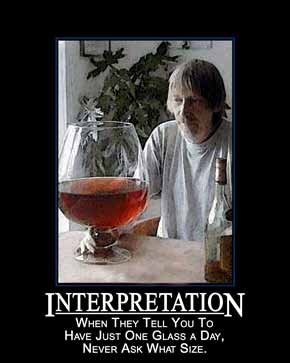
The Chicago Sun-Times has an interesting article on equivalency, which argues that there is no such thing as a standard drink at bars and restaurants. William Kerr and colleagues with the Alcohol Research Group hit several bars in northern California and found that "the typical wine, beer or mixed spirits drink in bars is larger than a standard drink, often by 50 percent or more."
The average glass of wine was 43% larger than a standard drink and the average draft beer was 22% larger than the standard 12 ounces. The team did no testing of bottled beer. And while shot glasses "are pretty uniform," mixed drinks with liquor were 42larger than the standard serving.
Factors such as glass size and the percent of alcohol by volume help make the on-premise drinks stronger, according to the study. However, Kerr said "probably the most important factor is the intentions of management and the bartender."
For example, restaurants and bars tend to pour large glasses of wine so customers feel like they are getting their money's worth.
The research, sponsored by the National Institute on Alcohol Abuse and Alcoholism, will be published in September in the journal Alcoholism: Clinical and Experimental Research, but was released online this week.
Wine & Spirits Daily
The Chicago Sun-Times has an interesting article on equivalency, which argues that there is no such thing as a standard drink at bars and restaurants. William Kerr and colleagues with the Alcohol Research Group hit several bars in northern California and found that "the typical wine, beer or mixed spirits drink in bars is larger than a standard drink, often by 50 percent or more."
The average glass of wine was 43% larger than a standard drink and the average draft beer was 22% larger than the standard 12 ounces. The team did no testing of bottled beer. And while shot glasses "are pretty uniform," mixed drinks with liquor were 42larger than the standard serving.
Factors such as glass size and the percent of alcohol by volume help make the on-premise drinks stronger, according to the study. However, Kerr said "probably the most important factor is the intentions of management and the bartender."
For example, restaurants and bars tend to pour large glasses of wine so customers feel like they are getting their money's worth.
The research, sponsored by the National Institute on Alcohol Abuse and Alcoholism, will be published in September in the journal Alcoholism: Clinical and Experimental Research, but was released online this week.
Wine & Spirits Daily


Move over, California; other states are producing their own fine wines
With more than 90 percent of the nation's wine production taking place in California, the achievements of other states' tiny wine regions almost never make it to the radar screen.
Yet many of the other wine regions are now making some spectacular wines.
Two states, Washington and Oregon, have long been credited as successes, but in my view, not for the right reasons.
Washington: It is rightly praised for its great cabernet sauvignons and merlots, but in the last decade, its greatest strength has been with riesling, from dry all the way to dessert styles.
Oregon: Its pinot noir has gained wide praise, but the truly great Oregon pinot blancs, rieslings and pinot gris have always, unfortunately, taken a subservient role.
So which other states are adding to this national diversity in wine drama? A single column this short can't do justice to the greatness I see emanating from elsewhere, but here is a snapshot:
New York: With four distinct wine regions, the Empire State produces stellar wines, including merlots and chardonnays of Long Island and the excellent French-American hybrids of the Hudson Valley. The most exciting wines in New York are the dry and off-dry rieslings from dozens of wineries in the picturesque Finger Lakes. Now selling so fast it's hard for wineries to produce enough for the demand, New York rieslings' success portends potential for this variety in the coming decade.
New York also produces an astonishing array of superb "other" wines, including wines from native American as well as hybrid grape varieties.
Michigan: Here again, riesling leads the pack, and with some drama. Wines from the Old Mission Peninsula have won major awards and gold medals at California wine competitions, and demand is pushing prices to levels Michiganders never imagined. But other grapes, such as gewürztraminer and pinot noir, also have shown great potential, and that has spurred winery development. Moreover, cherry wines are more popular than ever.
Virginia: Thomas Jefferson's failed ventures as a grape grower and winemaker have, two centuries later, been vindicated with some of the most exciting wines in the nation.
Made in a more reined-in style than California's full-blown, concentrated and powerful red wines, the reds of Virginia are led by two other Bordeaux grapes. Petit verdot and cabernet franc now both make exceptional red wines, while the Rhone white viognier, the French-Italian star pinot gris, and Jurançon favorite petit manseng all seem to thrive here.
Missouri: Winter weather that is so brutal to vines that it precludes the growing of French grapes has meant that Show-Me residents must grow special cultivars. With superb French-American hybrids vignoles (a floral, pineapple-y white) and seyval leading the way, Missouri wineries have developed a following for their distinctive wines. A recent addition to the scene is Norton -- a native American vine that yields a near-black wine with dramatic potential.
We have no space left for the excellence of Ohio riesling, Wisconsin Foch, Rhode Island gewürztraminer, New Mexico sparkling and red wines, or the great variety coming out of Texas. Even Georgia, Indiana, New Jersey, Pennsylvania and Colorado are making their own statements.
With each of the 50 states now having at least one commercial winery, new wine tasting experiences are surfacing in places some people didn't know existed.
Dan Berger
Yet many of the other wine regions are now making some spectacular wines.
Two states, Washington and Oregon, have long been credited as successes, but in my view, not for the right reasons.
Washington: It is rightly praised for its great cabernet sauvignons and merlots, but in the last decade, its greatest strength has been with riesling, from dry all the way to dessert styles.
Oregon: Its pinot noir has gained wide praise, but the truly great Oregon pinot blancs, rieslings and pinot gris have always, unfortunately, taken a subservient role.
So which other states are adding to this national diversity in wine drama? A single column this short can't do justice to the greatness I see emanating from elsewhere, but here is a snapshot:
New York: With four distinct wine regions, the Empire State produces stellar wines, including merlots and chardonnays of Long Island and the excellent French-American hybrids of the Hudson Valley. The most exciting wines in New York are the dry and off-dry rieslings from dozens of wineries in the picturesque Finger Lakes. Now selling so fast it's hard for wineries to produce enough for the demand, New York rieslings' success portends potential for this variety in the coming decade.
New York also produces an astonishing array of superb "other" wines, including wines from native American as well as hybrid grape varieties.
Michigan: Here again, riesling leads the pack, and with some drama. Wines from the Old Mission Peninsula have won major awards and gold medals at California wine competitions, and demand is pushing prices to levels Michiganders never imagined. But other grapes, such as gewürztraminer and pinot noir, also have shown great potential, and that has spurred winery development. Moreover, cherry wines are more popular than ever.
Virginia: Thomas Jefferson's failed ventures as a grape grower and winemaker have, two centuries later, been vindicated with some of the most exciting wines in the nation.
Made in a more reined-in style than California's full-blown, concentrated and powerful red wines, the reds of Virginia are led by two other Bordeaux grapes. Petit verdot and cabernet franc now both make exceptional red wines, while the Rhone white viognier, the French-Italian star pinot gris, and Jurançon favorite petit manseng all seem to thrive here.
Missouri: Winter weather that is so brutal to vines that it precludes the growing of French grapes has meant that Show-Me residents must grow special cultivars. With superb French-American hybrids vignoles (a floral, pineapple-y white) and seyval leading the way, Missouri wineries have developed a following for their distinctive wines. A recent addition to the scene is Norton -- a native American vine that yields a near-black wine with dramatic potential.
We have no space left for the excellence of Ohio riesling, Wisconsin Foch, Rhode Island gewürztraminer, New Mexico sparkling and red wines, or the great variety coming out of Texas. Even Georgia, Indiana, New Jersey, Pennsylvania and Colorado are making their own statements.
With each of the 50 states now having at least one commercial winery, new wine tasting experiences are surfacing in places some people didn't know existed.
Dan Berger
French Wines Kick Up Their Advertising Heels
French wines are taking things up a notch (or two or three) with a new promotional campaign in the U.S. Calling it an "ambitious" three year marketing blitz, the "Wines of France" are hoping to "boost gains" and "build consumers' knowledge of French wines." The umbrella campaign will see an increased annual spend of $2.6 million for 2008 and cover all avenues of promotion.
Wines of France says it will launch "an aggressive sales promotion campaign" across the U.S., but focus mainly on the key markets of New York metro, Washington DC metro, South Florida, California, Illinois, Texas and Massachusetts. This will include tastings in both the on- and off-premise, as well as a host of promotional materials for all stores backed by French music.
The promotional campaign will be accompanied by a new website, www.wines-france.us that went live earlier this week. It's aimed at educating Americans about grape varietals and French wine regions, in addition to featuring interviews and a "Question of the Week." Wines of France spokesperson Sheri Sauter Morano, Master of Wine, will also choose "My Top French Wine Picks," which features wines that fall in the $8 and $25 range.
It's no secret that French wines have struggled in recent years as U.S. consumers (among others) have increasingly opted for cheaper, easier to read labels. Earlier this month France approved a five-year plan to modernize its wine industry and help it better compete internationally. The most controversial initiative was a proposal to create three categories of French wines. A new mid-quality category, called the "Wines of France," most closely mirrors New World wines by including the grape varietal on the label (instead of grape origin) and using cheaper production practices, such as adding wood chips and tannins.
Recall that the EU recently passed a new wine system to cut down production and help European wines better compete internationally as well.
Wine & Spirits Daily
Wines of France says it will launch "an aggressive sales promotion campaign" across the U.S., but focus mainly on the key markets of New York metro, Washington DC metro, South Florida, California, Illinois, Texas and Massachusetts. This will include tastings in both the on- and off-premise, as well as a host of promotional materials for all stores backed by French music.
The promotional campaign will be accompanied by a new website, www.wines-france.us that went live earlier this week. It's aimed at educating Americans about grape varietals and French wine regions, in addition to featuring interviews and a "Question of the Week." Wines of France spokesperson Sheri Sauter Morano, Master of Wine, will also choose "My Top French Wine Picks," which features wines that fall in the $8 and $25 range.
It's no secret that French wines have struggled in recent years as U.S. consumers (among others) have increasingly opted for cheaper, easier to read labels. Earlier this month France approved a five-year plan to modernize its wine industry and help it better compete internationally. The most controversial initiative was a proposal to create three categories of French wines. A new mid-quality category, called the "Wines of France," most closely mirrors New World wines by including the grape varietal on the label (instead of grape origin) and using cheaper production practices, such as adding wood chips and tannins.
Recall that the EU recently passed a new wine system to cut down production and help European wines better compete internationally as well.
Wine & Spirits Daily
Tuesday, June 17, 2008
Red Wine's Resveratrol May Help Battle Obesity
Resveratrol, a compound present in grapes and red wine, reduces the number of fat cells and may one day be used to treat or prevent obesity, according to a new study.
Past research found that resveratrol protected laboratory mice that were fed a high-calorie diet from the health problems of obesity, by mimicking the effects of calorie restriction. Researchers at the University of Ulm in Germany wanted to know if resveratrol could mimic the effects of calorie restriction in human fat cells by changing their size or function. The German team used a strain of human fat cell precursors, called preadipocytes. In the body, these cells develop into mature fat cells, according to the study's lead author, Pamela Fischer-Posovszky, PhD, a pediatric endocrinology research fellow in the university's Diabetes and Obesity Unit.
In the cell-based study, they found that resveratrol inhibited the pre-fat cells from increasing and prevented them from converting into mature fat cells. Also, resveratrol hindered fat storage. Most interesting, according to Fischer-Posovszky, was that resveratrol reduced production of certain cytokines (interleukins 6 and 8), substances that may be linked to the development of obesity-related disorders, such as diabetes and clogged coronary arteries. Also, resveratrol stimulated formation of a protein known to decrease the risk of heart attack. Obesity decreases this substance, called adiponectin.
The new finding is consistent with the theory that the resveratrol in red wine explains the French paradox, the observation that French people eat a relatively high-fat diet but have a low death rate from heart disease.
"Resveratrol has anti-obesity properties by exerting its effects directly on the fat cells," Fischer-Posovszky said. "Thus, resveratrol might help to prevent development of obesity or might be suited to treating obesity."
Fischer-Posovszky cautioned that, while the health benefits of resveratrol seem promising, there is not sufficient knowledge about the effects of long-term treatment. One small study found that a single dose of up to 5 grams of resveratrol (much higher than the amount in a bottle of red wine) caused no serious ill effects in healthy volunteers, she pointed out. However, she said another study theorized that resveratrol may stimulate the growth of human breast cancer cells, possibly because resveratrol's chemical structure is similar to a phytoestrogen, an estrogen-like substance found in some plants.
Detailed results will be presented at The Endocrine Society's 90th Annual Meeting in San Francisco.
This study was partly funded by the German Research Association (Deutsche Forschungsgemeinschaft) and the Ministry of Science, Research and Arts (Ministerium fuer Wissenschaft, Forschung und Kunst), Baden-Wuerttemberg.
ScienceDaily
Past research found that resveratrol protected laboratory mice that were fed a high-calorie diet from the health problems of obesity, by mimicking the effects of calorie restriction. Researchers at the University of Ulm in Germany wanted to know if resveratrol could mimic the effects of calorie restriction in human fat cells by changing their size or function. The German team used a strain of human fat cell precursors, called preadipocytes. In the body, these cells develop into mature fat cells, according to the study's lead author, Pamela Fischer-Posovszky, PhD, a pediatric endocrinology research fellow in the university's Diabetes and Obesity Unit.
In the cell-based study, they found that resveratrol inhibited the pre-fat cells from increasing and prevented them from converting into mature fat cells. Also, resveratrol hindered fat storage. Most interesting, according to Fischer-Posovszky, was that resveratrol reduced production of certain cytokines (interleukins 6 and 8), substances that may be linked to the development of obesity-related disorders, such as diabetes and clogged coronary arteries. Also, resveratrol stimulated formation of a protein known to decrease the risk of heart attack. Obesity decreases this substance, called adiponectin.
The new finding is consistent with the theory that the resveratrol in red wine explains the French paradox, the observation that French people eat a relatively high-fat diet but have a low death rate from heart disease.
"Resveratrol has anti-obesity properties by exerting its effects directly on the fat cells," Fischer-Posovszky said. "Thus, resveratrol might help to prevent development of obesity or might be suited to treating obesity."
Fischer-Posovszky cautioned that, while the health benefits of resveratrol seem promising, there is not sufficient knowledge about the effects of long-term treatment. One small study found that a single dose of up to 5 grams of resveratrol (much higher than the amount in a bottle of red wine) caused no serious ill effects in healthy volunteers, she pointed out. However, she said another study theorized that resveratrol may stimulate the growth of human breast cancer cells, possibly because resveratrol's chemical structure is similar to a phytoestrogen, an estrogen-like substance found in some plants.
Detailed results will be presented at The Endocrine Society's 90th Annual Meeting in San Francisco.
This study was partly funded by the German Research Association (Deutsche Forschungsgemeinschaft) and the Ministry of Science, Research and Arts (Ministerium fuer Wissenschaft, Forschung und Kunst), Baden-Wuerttemberg.
ScienceDaily
CONSUMERS TRADING DOWN
Consumers' annual income could determine the amount of money they spend on a bottle wine says the Walstreet Journal.
Mid-tier consumers who fall in the $50,000 to $100,000 income range is "selectively deselecting" in what Thom Blischok, president of IRI Innovating and Consulting, called a "substitution strategy." They're choosing to trade-down and buy cheaper wines.
People who earn $100,000 and above are "deprioritizing." They are "asking themselves, 'Do I really need a $100 bottle of wine? Wouldn't a $40 bottle do,'" said Blischok.
Wine & Spirits Daily
Mid-tier consumers who fall in the $50,000 to $100,000 income range is "selectively deselecting" in what Thom Blischok, president of IRI Innovating and Consulting, called a "substitution strategy." They're choosing to trade-down and buy cheaper wines.
People who earn $100,000 and above are "deprioritizing." They are "asking themselves, 'Do I really need a $100 bottle of wine? Wouldn't a $40 bottle do,'" said Blischok.
Wine & Spirits Daily
NEW ZEALAND SEES LARGEST VINTAGE
New Zealand has just recorded its biggest ever vintage, with yields up almost 40% from last season, according to the New Zealand Wine Growers. Data shoes that 285,000 tons of grapes were harvested in 2008, due mainly to a combination of an increased producing area and favorable growing conditions.
New Zealand is reportedly seeing strong demand in Australia, the UK and the U.S., among other markets. Could New Zealand wines replace Australia as the next big import?
Wine & Spirits Daily
New Zealand is reportedly seeing strong demand in Australia, the UK and the U.S., among other markets. Could New Zealand wines replace Australia as the next big import?
Wine & Spirits Daily
Subscribe to:
Posts (Atom)