Sunday, June 8, 2008

Saturday, June 7, 2008

Bacchanalia, Rome's Official Orgy


Aphrodisiacs of Ancient Rome With Red Wine Of course!

Ancient Rome used to be one of the most pleasure-seeking places and times of all cultures. Emperor Caligula (A.D. 37-51) led a particularly decadent empire. The self-indulgence of this age includes: orgies, feasts, bath houses, as well as many kinds of aphrodisiac potions, foods, perfumes, erotic artwork and more. To best understand and appreciate this debauchery of this era, let's take a walk through a rise and fall of the hedonistic history of Ancient Rome, as well as the ancient aphrodisiacs that this rich culture cultivated.

It is said that the first known settlers of Ancient Rome lived on Palatine Hill in1000 B.C. Rome itself was founded around 753 BC. In 600 B.C. Rome was ruled by the Etruscans. By 509 B.C. the Etruscans were driven out and The Roman Republic was founded. In 300s BC the Romans became aware of Greek philosophies and many Romans came to worship Greek gods and goddesses; however, they gave them Roman names (Thus much Greek and Roman Mythology is identical, but for the names). Rome began to slowly overtake and influence much of civilization.

Here is but a sampling of some of the aphrodisiacs used in Ancient Rome.

Asparagus: This phallic vegetable was highly valued in ancient Rome as a delicacy. It was even considered a food fit for gods. The Ancient Romans as well as many over cultures considered asparagus an aphrodisiac.

Arugula: Arugula has been documented as an aphrodisiac since the first century A.D. The ancient Romans believed in the aphrodisiac powers of arugula. It's also a good source of vitamin A (which improves night vision) and can help digestion.

Bathing: By 3 A.D. Rome became the bathing capital of the world. At its height, thirteen aqueducts supplied ancient Rome with 300 gallons of water per person per day. People by the hundreds would congregate daily at the public watering holes. Some Roman emperors are said to have bathed seven or eight times a day. The massive bathhouses often had sports fields or courts. Bathing could be done in separate rooms for tepid, hot and cold water. There would be space to walk, sit, and socialize. After bathing, the Romans would be oiled and massaged.

Carrots: Carrots also high in vitamin A. Some think they can stimulate the male sex drive. Because of its phallus shape, the carrot has long been associated with sex. There is a story about Emperor Caligula (A.D. 37-51). It is said that he once served every member of the Roman Senate a feast entirely made up of carrot dishes hoping to get them horny and turn it into an orgy.

Feasting: In ancient Rome food and feasting was a big part of socializing. Men ate while slaves fed them. The Feast of Lupercal was thrown to honor the Roman god of fertility. During this feast, it is said that Roman priests would sacrifice a goat and slice the hide into small strips. Young Roman men would then take the strips of hide and dash through the streets of Rome, spanking women with them. This was believed to make the woman more fertile. Thus, the ladies wanted to be slapped, and would wear skimpy clothing, or even go naked, in order to expose as much skin as possible.

Figs: Figs are said to be the original forbidden fruit and are definitely considered an aphrodisiac food. There is an Ancient Roman legend that hints to the Figs part in the founding of Rome. It says that Rome was built on the spot where a Fig tree caught Romulus and Remus as they floated down the river Tiber in a basket.

Nuts: Almonds and walnuts are considered symbols of fertility. In ancient Roman culture, these nuts where used in fertility ceremonies. It is written that the Romans tossed walnuts rather than rice at newlyweds. These nuts are high in zinc which has been known to aid male sexuality

Odd Mythology: In ancient Rome, love and aphrodisiac potions were sold on the streets. Ancient Romans looked for new sexual experiences openly and unashamed. Among the odd ingredients in some of these ancient potions were starfish, sucking fish, human marrow, and even menstrual blood.

Orchids: In Ancient Rome these beautiful flowers were perceived to have aphrodisiac powers. The bulbs of these plants were considered to be a cure for many sexual problems.

Oysters: Oysters have been accepted as an aphrodisiac food as early as the second century. Some Romans believed women were wanton after drinking wine and eating oysters. Many say that oysters resemble sex organs, thus enhancing their sensuality. In Ancient Rome, thousands of slaves were sent to the English Channel to gather oysters for their feasts.

Perfume: Julius Caesar was quoted as saying that perfume sparked the "Fire of Love" in every human. Rich ancient Romans applied perfume three times a day or more. By the 1st century AD, Rome used about 2,800 tons of frankincense and 550 tons of myrrh each year.

Roses: Ancient Roman mythology of the rose is vast. It is said the Flora, the deity of flowers, was walking through the woods when she happened upon the dead body of a lovely nymph. Filled with sorrow, Flora gave the nymph new life as a flower whose beauty surpassed all others. The goddess of love Venus offered the bloom splendor, radiance, rapture and lure. The sun gave her warmth. The god of wine, Bacchus scented her with nectar. When complete she was crowned with dewdrops and was hailed the "Rose, Queen of Flowers". She was given to Venus's young son, Cupid, the deity of love and desire. Roman myth tells that Cupid spilled a vase of sweet nectar, and on that spot, roses grew. Cupid and Venus are also involved in the Roman lore of how the rose got its thorns. The tale follows that Cupid bent to sniff an open rose and was stung by a bee hiding inside. This displeased Venus, and she had Cupid shoot a line of bees with his arrow. Venus took the bees and bound them to the rose plant as thorns. Still, the rose is noted as the favored flower of Venus. Another Roman legend, involving mischievous little Cupid, is that Cupid bribed Harpocrates, the god of silence, with a rose so that he would not tell of his mother's (Aphrodite's), lured affairs. Thus, the rose has come to be a token of silence. In history, rather than mythology, the Romans truly had a passion for roses. Roses decorated ceremonial feasts and Romans often gorged on rose pudding. Rosewater and rose oil flowed through the emperor's fountains. They also perfumed the baths at many of the public bath houses. In public arenas, sun awnings were often saturated with rosewater, so crowds could revel in the scent. People adorned themselves with roses, and used them to decorate their homes; some used rose petals to stuff pillows. Most, if not all, Roman love potions and aphrodisiacs contained roses. Roses were extremely prominent at, the "Bacchanalia," Rome's official orgy. It is said that Rome's Emperor Nero sprayed dinner guests with rose perfume between courses.

Sweat of Gladiators: (link to Pheromone article) Sweat is full of pheromones. Thus, as strange as it seems, it makes perfect sense that ladies would be turned on by the sweat of these Sword Men. Women were said to collect the sweat of gladiators and use it as an aphrodisiac (although, it makes more sense to just have sex with the Gladiator - which must have happened quite a bit). Many gladiators were wealthy and had large social circles, like sports heroes of the modern day. However, the perspiration of the Red Sox is not put into potions. In ancient Rome, Gladiators sweat went into exclusive lotions for wealthy women looking for a turn-on.

Sher Core

King Tut Drank Red Wine, Researcher Says

King Tutankhamen drank red wine, says a researcher who analyzed very dry traces of the vintage found in his tomb. Maria Rosa Guasch-Jane, who briefed reporters Wednesday at the British Museum, said she had invented a process which gave archaeologists a tool to discover the color of ancient wine.
Guasch-Jane also discovered that the most valued drink in ancient Egypt, shedeh, was made of red grapes.

"This is the first time someone has found an ancient red wine," said Guasch-Jane, who earned her Ph.D. in pharmacy from the University of Barcelona in September.

Wine bottles from King Tutankhamun's time were labeled with the name of the product, the year of harvest, the source and the vine grower, Guasch-Jane said, but did not include the color of the wine.

Several clues had led scientists to believe that the wine may have been red: drawings from the time of grapes being pressed into wine were red and purple, for example. But the color of King Tut's wine was impossible to verify until Guasch-Jane invented a process to detect a color compound not found in white wine called syringic acid.

To test her method, Guasch-Jane scraped residue from wine jars owned by the British Museum and the Egyptian Museum in Cairo. Two of the jars came from King Tut's tomb, discovered by English archaeologist Howard Carter in 1922.

Winemaking dates to 5400 B.C., according to American molecular archaeologist Patrick McGovern, who discovered the earliest known traces of grape residue in northern Iran in 1994.

Grapevines are not native to Egypt, McGovern explained at Wednesday's presentation. Scientists believe the first wine discovered in Egypt, buried in King Scorpion's tomb in about 3125 B.C., was produced in Jordan and transported 500 miles (800 kilometers) by donkey and boat to Egypt, he said. Eventually, grapevines were planted in Egypt.

Research shows that ancient Egyptian kings and members of the upper class drank wine regularly, but common people consumed it only during festivals and special occasions, Guasch-Jane said. Wine was offered to gods in ceremonies, and kings were buried with jars of wine and food similar to what they consumed when they were alive, she said.

JENN WIANT

"Better Wine Coming to USA or am I Alcoholized"?

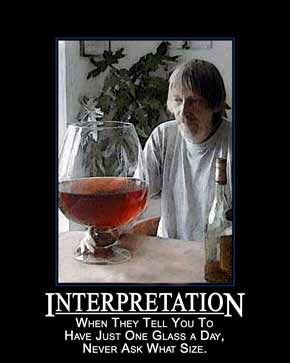
I have been fortunate and have not had a horrible headache after a night of bacchanalia in years. California was a whorehouse with formula wine production and "faux pas" practices, I was a victim of this. I have also consumed and continue to drink wines from all around the world while living here in America, but for the longest time now, I have not gotten a headache. I only drink a bottle a day "like an apple a day" and on the weekends, I only drink two to five bottles per night for my personal consumption, depending on the company and ambiance, but I am no Rasputin!
I wonder if there is better wine coming in to the country or am I alcoholized?

Wino

Friday, June 6, 2008

"Should I Spit it Out or Swallow It"?

Wine tasting can be both fun and responsible.

We've all seen the wine taster who's had a few tastes too many. It's always a bit disconcerting to wonder if that person is driving in the lane next to us on the way home. Besides the obvious safety and legal ramifications of going overboard with wine consumption, there are also practical consequences: a hang-over, the inability to distinguish one wine from another or making wine purchases we'd never make if we were clear headed.

By the time we are mature enough to appreciate (and afford) fine wine, we are usually too old for those "pub crawls" of spring breaks past. Still, it's easy for "another taste" to lead to another and another... That adds up quickly.

You can stay in control and get more out of the wine tasting experience by practicing "S to the fourth power": Swirl, Sniff, Sip and Spit. The great thing about wine tasting is that it's one of the few occasions when you can break etiquette and spit. In wine country or at a festival all you need to do is ask for a spit cup. This is strongly advised if you don't want to hazard getting back-splash from the dump bucket. Keep the cup close to your mouth.

Spitting your wine takes a bit of practice. You can develop a confident spitting technique in the shower or after brushing your teeth: take a small mouthful of water (or mouthwash) and expel it in a steady, even stream. Don't rush or be too forceful and you won't spray.

It isn't about being stuffy or snooty. It's about having fun while being responsible and staying safe. It's an attitude and a frame of mind. We hope it will be an idea that spreads to all wine lovers.

Red Wine Buzz

"When Big Is Better"

Large Capacity Wine Bottles

While most people are most familiar with 750 mL full-size bottles and 375 mL half-bottles, one occasionally encounters bottle names that sound vaguely Biblical (aside of invoking a mental image of a large caliber handgun).

The larger capacity bottle sizes contain volumes in multiples of the standard 750 mL full-size bottle. These sizes can be as large as 50 liters (67 standard bottles) but such bottles are very rare. It is not clear just how these large capacity bottles came to be used, but they offer the advantage of greater longevity - since there is less air n the bottle, relative to the volume of wine.
Just when it seems that this subject is simple enough, it turns out a few of the names (taken from biblical kings of the Old Testament) can refer to different sizes, depending on wine making region. However, more often than not, producers around the globe follow the Burgundian nomenclature. So here goes:...

CAPACITY

1X / 0.75L Standard, Full size.

2X / 1.5L Magnum - universally used.

3X / 2.25L Marie-Jeanne - used in Bordeaux only.

4X / 3.0L Double Magnum - used in Bordeaux.

Jéroboam - used in Burgundy and Champagne.

6X / 4.5L Jéroboam - in Bordeaux.

Rehoboam - in Burgundy and Champagne.

8X / 6.0L Impériale - used in Bordeaux only.

Methusaleh - used in Burgundy and Champagne.

12X / 9.0L Salmanazar - used in Burgundy and Champagne.

16X / 12.0L Balthazar - used in Burgundy and Champagne.

20X / 15.0L Nebuchadnezzar - used in Burgundy and Champagne

Red Wine Buzz

"Fighting wine ignorance one person at a time"

Learning module - Ageing Wine

Many readers want to know how their wine will (or can) age. Most wines today are made to be consumed within a short period after release. They are often made from very ripe grapes (with low acidity and ripe, soft tannins) in order to be more immediately accessible. This comes at the cost of longevity. The goal in this approach to wine making is an immediately satisfying wine rather than the deferred gratification of a complex and nuanced wine after extended cellaring.

Determining how long a wine will age is often a gamble. Ultimately, it is not possible to absolutely and precisely predict the lifespan of a wine. This module details the redwinebuzz.com approach to estimating a wine's longevity.

Three loose rules of thumb.

One common rule of thumb for estimating longevity is that however long a wine takes to reach peak maturity is the length of time it will taste its best. Obviously, some wines, even red wines, reach maturity quickly. Nonetheless, one can roughly project the life term of a wine by considering its level of maturity and integration against its current age. At this point, some experience is necessary to serve as a reference point of when a particular wine from a specific region is at its peak.

Another way of gauging age worthiness is to consider the the degree of maturity or development of a wine at the time it is tasted as compared to its character just after it was bottled. One can think of similar wines (already tasted) from the same region or vineyard, producer and vintage as reference wines. Young wines are generally exuberant and bursting with flavors and energy. They may go through a phase where they are closed, and austere but then, with age, they blossom. The taster has to think about how lively and youthful a particular wine tastes at a given time. One has to use their experience to estimate a period of time necessary for a wine to "calm down", integrate and reach the level of maturity typical of its style and region. Fine, mature wines are composed, graceful, nuanced and integrated. Wines past their prime are dull, withered and faded. One has to consider how long a given wine has take to reach its particular stage of evolution in the bottle. The shorter the time between harvest and peak maturity, the shorter the overall lifespan. This, of course, requires some experience in wines in general and the wines from the same year and growing region as the wine in question.

There is some disagreement about the value of using the the length of time a wine needs to unwind or open up in the decanter as an indicator of longevity. We prefer to look at another character of a given wine during assessment. This involves leaving some wine out overnight - in an opened bottle and in a glass. The degree of decline overnight gives an indication of age worthiness. If the wine is as vibrant and lively (or more so) the following morning, then this tends to indicate that it will last for at least several years when cellared properly. This process helps approximate or simulate the changes seen with ageing and is based on the concept of a wine's reductive capacity or reserve - the ability of its ingredients to withstand oxidation with minimal change or deterioration. If the wine tastes oxidized and falls apart by the morning, it is not likely to be good past one to three years (at most) with optimal cellaring.

Taking it apart for deductive approach.

Some wines do display hallmark characteristics indicative of longevity. In general, in order for a wine to last over the years it must have sufficient levels of flavor compounds (extract), acidity and tannins.

The younger the wine, the fresher, more vibrant, exuberant, more concentrated and less integrated its fruit aromas and flavors are. (Concentration should not be confused with sweetness or body). Fruit flavors fade with time. Big, exuberant aromas and flavors early in a wine's life are not enough. The wine has to be made from grapes picked at the right time (growing location and weather play a role too). Wines made from over-ripe grapes do not age into graceful, fine elixirs nor do they have the same longevity as wines made from grapes picked based on prudent harvesting decisions. Each variety has its signature or characteristic aromas that distinguish it as a Cabernet sauvignon or a Syrah or a Pinot Noir. There is some variation depending on clones in the vineyard, location and weather. The small differences notwithstanding, this distinguishing character is called varietal typicity. However, the more distinct and typical of the best examples of the variety (in its youth) the aromas are (allowing for clonal variation and blending of different clones in the finished wine), the more likely the fruit was grown in the right place, the vintage was favorable and the fruit was picked at the right time to make an age worthy wine.

The flavor and aroma compounds in ample supply are not enough. Something needs to preserve them. This is thought to be accomplished by acidity and tannins. High acidity (high TA and low pH) contribute to a wine's longevity. The younger the grape at harvest, the higher the acid levels. While good acidity (high TA and low pH) are useful indications, the nature of the grape that must be considered. A Pinot should have higher acidity than a Syrah. Finally, one must take care to not confuse the acidity of the finished wine with the acids in the grapes at the time of harvest. Acidulation, a commonly used technique, is the addition of certain acids (which occur naturally in grapes) to the fermenting wine to perk up its acidity. A wine made this way will age differently than one with naturally high acids.

Tannins are the third factor in the longevity equation. They are present in far greater quantities in red wine grapes. Hence the tendency of red wines to have greater longevity. This group of chemicals includes the molecules responsible for color aroma and flavor. They come from the skins, the seeds and stems (if whole cluster fermentation is performed). All evolve as the grape matures. Seeds turn from green to yellow to brown as the grape matures and senesces. Stems go from plump, firm and green to soft and withered and then dry and become brown with time brown. Along each point in this evolution, different flavor and texture characteristics of tannins can be seen. In seeking to define "physiologic ripeness" tannins have been generally divided into "green"' and "ripe" categories. This is a generalization and, as such, is as limiting or misleading as it is helpful. There are vague associations of green as astringent and bitter and ripe as supple or smooth, but those are generalizations do not give all the answers.

It is important, at this point, to distinguish between “astringent” and “bitter”. Astringent is the dry, puckery feeling of a thirsty sponge sucking up all the water from your mouth (see here for a longer discussion). It is a tactile sensation. Bitter, on the other hand, is a flavor and is sensed at the back of the tongue. It can contribute to a hard, harsh or rough character of the tannins, but one must first look at the two qualities separately before making a final assessment of a wine's tannins. Astringency, as a characteristics of tannins, is due to their tendency to bind proteins. This is why big, red wines like Barolos, Syrahs, Petit Syrahs and Cabernet-based blends (which are very tannic) go well with red meat – which is is big on protein. The younger the wine with long cellaring potential is, the more astringent (but not necessarily bitter) it generally is. Bitterness will probably not change much. Getting a sense of where the wine's tannins are in their evolution - relative to the acidity and level of development in the fruit - by examining their astringency and texture is our approach to estimating age worthiness.

Although there is some research now suggesting otherwise, younger tannins are believed to be not polymerized (combined into chains or clusters of chains of the same molecule), or at least polymerized to a lesser degree than older tannins. Each tannin molecule has more places on it where it can bind to proteins. Since young tannins are thought to be non-polymerized, or polymerized to a lesser degree, they are believed to feel more astringent than they do in the same wine after some aging. They produce this astringent sensation by binding to the salivary proteins and to the proteins on the surface of the cells lining your mouth. This compromises the ability of saliva to lubricate the mouth. The intensity of the resulting astringent sensation is thought to be proportional to both the total amount of tannins and the degree to which they are not polymerized.

Wine is believed to be a very active chemical system in constant flux. Tannins are believed to polymerize with time in the bottle (forming a sediment on the side of the bottle) and become silkier, supple and less astringent as a result. Evidence exists that there is both polymerization and de-polymerization of tannins occurring in wine at the same time. In the very slow process of polymerization, it may be that tannins they take up the oxidative chemicals in the wine. This in turn may be a basis (at least in part) of how tannins preserve the other components of a wine. Before a wine is bottled, it spends some time in a barrel. Air slowly seeps in through the grain of the wood of the barrel. Because this process mellows a wine, it is thought that the oxygen which bleeds into the barrel interacts with the tannins, and helps them polymerize. This is can be augmented or accelerated by micro-oxygenation (slowly infusing minute amounts of oxygen into wine) which to softens and mellows a wine. This is not a very well understood process. By comparison, délestage is a tannin management method whose goal is to reduce or eliminate bitter or "green tasting" tannins.

In assessing a wine's tannins one must look at both astringency and bitterness but not confuse the two. When one thinks of the level astringency and texture of the tannins in the context of the wine's age and method's used in making it, a general sense of longevity can be gained.

Final points.

All this speculation is contingent on proper cellar conditions. These include: a steady temperature of 55-60 degrees Fahrenheit, about 60% relative humidity, darkness and protection form vibration (wine bottles should not be turned periodically as some suggest). Room temperature is problematic, particularly in the summer. When wine reaches a temperature of 80 degrees Fahrenheit, it begins to "cook". This is not in the bubbling and boiling sense but, rather, it refers to a rapid deterioration of flavor components resulting in a "cooked" flavor profile. Additionally frequently alternating temperatures between two extremes are also detrimental to longevity.

Finally, closures are very influential. Screw caps and crown caps form the tightest seal resulting in the slowest rate of oxygen entry. They are essentially on par with natural cork closures. Synthetic cork closures, on the other hand, actually allow the highest rate of oxygen entry in to the bottle of all types of closures. The faster oxygen enters a bottle, the faster the evolution and decline of the wine inside. While it is not clear how screw caps and crown caps can perform (in the long term) in a cellar, they are used primarily because they deliver a stable and fresh wine to the consumer by preventing rapid deterioration.

Red Wine Buzz